Category Archives: Climate Change

Adapting to Climate Change on the Roof of the World

The Tibetan Plateau is one of the highest and most challenging places in the world to raise livestock. Cold winters, fragile grasslands, and the growing impacts of climate change make herding a demanding way of life. Due to the unique conditions on the Tibetan Plateau, many adaptation strategies that have worked elsewhere are unsuitable here.

Our research focused on 682 herder households in the Pumqu River Basin to explore the role of livestock diversification—keeping a mix of animals such as yaks, cattle, sheep, and goats—as a way to adapt to these conditions. Although diversification has long been part of Tibetan herding traditions, its potential as a climate adaptation strategy had not been fully examined.

The study found that diversification is widespread and is largely driven by opportunities rather than desperation. Households with more labour, better equipment, warm sheds, barns, and access to government support are more likely to keep a variety of animals. While changes in climate and the environment can also influence decisions, the pull of better resources and support is stronger. Diversification tends to increase total livestock numbers, which strengthens livelihoods and allows families to reinvest in their herds. Over time, this creates a cycle in which improved resources and more resilient herds reinforce each other.

These findings suggest that, in the right conditions, diversification can be a proactive and sustainable way for herders on the Tibetan Plateau to adapt to climate change and maintain their way of life.

Read the full open access paper here:

Yu, Y., Yan, J., Akin, S., Liu, H. & Martens, P. (2025). Livestock Diversification works as a helpful livelihood strategy for herders on the Tibetan Plateau: Implications for climate change adaptation. Sustainable Futures, 10, December 2025, 101116. https://doi.org/10.1016/j.sftr.2025.101116

Cool by Design: What Chinese Villages Teach Us About Climate, Comfort, and Community

Photograph: Wang Ziling

In a recent systematic review, we explored the links between spatial planning and how people experience and interact with their outdoor environments. Focusing on traditional Chinese villages, we found that elements such as building layout, vegetation, and open space design significantly influence not only the local microclimate but also people’s thermal comfort and social behavior.

What stood out was the importance of context. The effectiveness of certain design principles varies across geographic regions, cultural settings, and spatial scales—from single courtyards to entire village clusters. Another key insight: while many studies focus on temperature and airflow data, surprisingly few address how people actually experience and adapt to their environment.

We argue for a more integrated approach—one that blends climate-sensitive design with ecological awareness and human perception. In the face of rising temperatures and climate adaptation challenges, these traditional systems may offer valuable, place-based lessons for the future of rural development.

Read the full article here:
Wan, Z., Liu, H., Yu, Y., Wu, Y., Melchior, M., Martens, P., Krafft, T., & Shaw, D. (2025). How Does Outdoor Spatial Design Shape the Microclimate, Comfort, and Behavior in Traditional Chinese Villages? A Systematic Review Across Scales, Contexts, and Users. Sustainability17(15), 6960. https://www.mdpi.com/2071-1050/17/15/6960

Feeling the heat -or not?

Dutch youth are growing up in a world where environmental problems are hard to ignore. From disappearing green spaces to rising urban heat, many young adults feel these changes deeply. But how do they cope? And are we paying enough attention?

Our recent study surveyed over 1,000 young people in the Netherlands (aged 16–35) and found something striking: while nearly all respondents had experienced at least one form of environmental stress (especially noise and loss of nature), their emotional responses were far from uniform.

✅ About 20% reported that these stressors significantly affected their daily lives.
✅ 23% worried about the future of their local environment.
✅ 36% felt emotional pain (known as solastalgia) due to the degradation of their surroundings.
🚫 Yet at the same time, nearly 60% believed their own actions had little or no effect on environmental change.

The study reveals a complex picture: many young adults are clearly distressed by environmental degradation — but a large group also seems emotionally disengaged or feels powerless to act. Trust in government institutions is limited, and feelings of helplessness are widespread.

This mismatch between concern and engagement raises urgent questions:
How can we turn passive concern into meaningful action? How do we support young people in dealing with eco-anxiety and solastalgia? And how do we foster a sense of agency and collective care?

The answers may lie not just in policy, but in how we reconnect people — especially the next generation — with their local environments in ways that are empowering, inclusive, and hopeful.

Read the full study to explore how psychology, place attachment, and trust play a role in shaping how youth experience environmental change.

Venhof, V.S.M., Jeronimus, B.F. & Martens, P. (2025). Environmental Distress Among Dutch Young Adults: Worried Minds or Indifferent Hearts? EcoHealth https://doi.org/10.1007/s10393-025-01717-x

#EnvironmentalDistress #Solastalgia #DutchYouth #PlanetaryHealth #MentalHealth #EcoAnxiety #YoungVoices #Sustainability #ClimateJustice

How Much Does Climate Change Really Cost Our Health?

The manifold impacts of climate change are also seen in the field of health in most countries. It is particularly so in Africa, whose health systems are amongst the most fragile in the world. In his paper we did a review of existing literature, an analysis of secondary data, and spatio-temporal mapping to identify patterns, challenges, and potential interventions. It showcases the degree of vulnerability of the health systems of African countries to climate change, and describes some measures aimed at increasing their resilience to climate shocks. African health systems face significant challenges due to climate change, necessitating a comprehensive approach to enhance resilience.

Africa is particularly vulnerable to climate change due to its reliance on rainfed agriculture, limited financial resources, and existing health challenges. The effects of climate change exacerbate issues such as food insecurity, water scarcity, and the spread of diseases, leading to a cyclical pattern of poverty and health deterioration. For instance, changing weather patterns can heighten the incidence of vector-borne diseases like malaria, directly impacting public health systems in African countries. International cooperation can foster the sharing of knowledge, resources, and innovative solutions to enhance resilience in vulnerable communities.

Frameworks linking climate change initiatives with health organizations such as the WHO can help develop integrated strategies aimed at mitigating health risks associated with climate variability. This could involve improving surveillance systems for disease outbreaks linked to climatic changes, promoting sustainable agricultural practices, and reinforcing health infrastructure to cope with climate-related emergencies.

Moreover, such cooperation would encourage investments in climate adaptation and mitigation efforts. By pooling resources and expertise, countries can effectively tackle the multi-faceted challenges posed by climate change.

Building partnerships between African governments, international organizations, and local communities can lead to a more coordinated approach in combating the adverse impacts of climate change while safeguarding public health. Ultimately, strengthening these links will not only address immediate challenges but also promote sustainable development in the face of ongoing climate variability.

Read the full paper here: Filho, W. L., Gbaguidi, G.J., Diarrassouba, W. and Martens, P. (2025). Money for health: handling the costs of climate change to African health systems. Journal of Health, Population and Nutrition , 44:86. Doi: https://doi.org/10.1186/s41043-025-00802-9

Journalists’ Views on Low-Carbon City Transformation in China

Cities are recognized as significant contributors to carbon emissions due to their numerous productive enterprises and dense populations. Tackling climate change and achieving the transformation to low-carbon cities requires public participation. News media serve as the primary channel for the public to gain relevant information, and journalists’ attitudes significantly influence the content of related news reports.

This study focuses on the attitudes of Chinese journalists towards the transition to low-carbon cities, using semi-structured interviews in qualitative research to conduct 31 interviews with participants from Chinese mainstream medias.

This research discussed the journalists’ attitudes towards the low-carbon city transition, based on our samples studies, we find that (1) low-carbon city development brings some new opportunities for economic development and improving the overall urban living environment, despite challenges like lack of professional knowledge and information gaps. (2) Newsworthiness, audience preferences, journalists’ climate scientific knowledge, and management mechanisms, are key factors influencing journalists’ choice to cover low-carbon topics. Despite an increase in related reports, many media do not prioritize climate change or low-carbon transitions as core topics, and environmental news have a life cycle. (3) We suggests that media enhance collaboration with stakeholders, increase audience interaction to learn diverse voices, using storytelling and integrating technological innovations to improve low-carbon communication.

This study highlights the complex interactions between media, public participation, and environmental policies, offering a holistic view of the challenges and opportunities in promoting more inclusive and equitable low-carbon city transition.

Read the full paper here: Wu Y, Martens P and Krafft T (2025) Communication, inclusion, and environmental justice – journalists’ attitudes towards low-carbon city transformation in ChinaFront. Environ. Sci. 12:1506313. doi: 10.3389/fenvs.2024.1506313

Climate Change and Marine Fisheries

Climate change is not only impacting the oceans but the fishing industry also plays a role in worsening it. Rising sea temperatures and ocean acidification affect live in our oceans, and hence fishing communities and global food supplies. At the same time, fishing activities, like using fuel for boats, add greenhouse gases to the atmosphere.

In this review, we looked at over 140 studies to explore this two-way relationship. We highlight the challenges, like the lack of representation from regions most affected by climate change, and the need for better data and more collaboration between countries. Importantly, we also discuss solutions, such as new management strategies and technologies to make fishing more sustainable and climate-friendly.

If you’re curious about how we can protect both the planet and the people who depend on the oceans, check out our open-access article here:

Xu, Y., Krafft, T. & Martens, P. (2024). The interaction between climate change and marine fisheries: Review, challenges, and gaps. Ocean & Coastal Management, 259, 107479, https://doi.org/10.1016/j.ocecoaman.2024.107479

Sámi People’s Perspectives on Environmental Change and Mental Well-Being

The current body of research on the interplay between environmental shifts and the mental well-being of Circumpolar Indigenous Peoples predominantly adopts a ‘deficit’ perspective, focusing on risks and vulnerabilities. However, scant attention has been paid to exploring the protective and resilience-enhancing factors rooted in Indigenous strengths, particularly among populations such as the Sámi in the Circumpolar North.

Circumpolar Indigenous communities such as the Sámi possess rich traditional knowledge and cultural practices deeply intertwined with their environment and identity. Areas warranting deeper qualitative exploration encompass the dynamics of ‘strength-based factors’ interplay, the influence of community norms, individual coping strategies, and language for the Sámi community, as well as the distinctive variations and parallels among Circumpolar Indigenous peoples’ encounters and viewpoints regarding mental well-being amidst environmental shifts. In forthcoming mental health research and policy formulation, collaboration and inclusion of Indigenous communities stand as imperative steps to deepen comprehension of local adversities, vulnerabilities, and strengths alongside the intricate interplay of social, economic, and historical elements impacting mental well-being, as well as the (local) potential for adaptation.

By studying Indigenous people’s perspectives, public health efforts can identify and build on existing strengths within Indigenous communities and families to support their capacity to adapt to environmental changes and to promote and protect mental well-being. Integrating their perspectives can help tailor public health interventions to be culturally relevant, place-specific, and respectful of Indigenous values and knowledge. Moreover, this approach facilitates the identification of vulnerable groups and addresses disparities in mental health outcomes across the Circumpolar North. Circumpolar Indigenous communities such as the Sámi possess a distinctive holistic perspective on health, embracing mental, physical, and spiritual dimensions. By integrating these viewpoints into research and policymaking processes, involving Indigenous voices can yield more robust public health strategies, effectively addressing mental health within a broader framework.

Read the full paper here: Venhof, V.S.M., Stephens, C., Martens, P. (2024). Voices from the North: Exploring Sámi People’s Perspectives on Environmental Change and Mental Well-Being: A Systematic Literature Review. Challenges15, 30. https://doi.org/10.3390/challe15020030

“Dune” as a Mirror for Our Climate Crisis

Currently, Dune 2 is playing in our theaters. In a time when the climate crisis is becoming increasingly urgent, the science fiction world of Dune provides insight into the challenges our planet faces. At first glance, Frank Herbert’s story from 1965 about power, betrayal, and survival on the desert planet Arrakis seems to have little in common with our contemporary environmental issues. However, Dune is not just an epic adventure but also a parable about ecology, scarcity, and human interaction with the environment.

The ecological crisis on Arrakis, a planet where water is scarcer than gold, serves as a mirror for our world, where the effects of climate change are becoming more tangible. Arrakis, or Dune, is a battleground for limited resources, with the precious ‘spice’ at stake. This fictional element, essential for space travel, power, and life extension, serves as a metaphor for our own global competition for water, food, and energy. The conflict over the spice in Dune reflects the societal unrest we now see due to climate change and resource scarcity.

On the other hand, Dune shows how important adaptation and resilience are. The indigenous Fremen have masterfully adapted to their environment, with innovative methods for water conservation that are essential for their survival. Their lifestyle illustrates the need for our society to find sustainable solutions for environmental challenges such as water management and agricultural practices, adapted to changing climate conditions.

Dune also calls for a deeper ecological awareness and the necessity of a shared responsibility for the well-being of our planet. The aspirations of some characters to transform Arrakis into a more livable world could be seen as the contemporary movements for climate action. This saga also serves as a warning. It shows the destructive paths humanity can take when power, greed, and shortsightedness dominate our relationship with nature.

Thus, Dune is more than a story about interstellar politics and mystical powers. It was in the 1960s, but now more than ever, an urgent call for reflection on our own world. It invites us to critically reconsider the way we live, consume, and interact with our planet. But it also offers hope by showing that change is possible, that through collaboration, innovation, and respect for our planet, a more sustainable and just future is within reach.

Regenerative Economics for Planetary Health and Thrivability: The European Green Deal

This policy brief explains the importance of regenerative economic principles for achieving climate neutrality by 2050. Furthermore, we offer a perspective on why mainstream economic systems are unsustainable by design; as they are a legacy of the earlier mechanistic paradigm of the Industrial Age dominated by Newtonian sciences and Darwinian economics. We will explore how a mechanistic approach for societal and human development leads to economic growth models that operate at the cost of vital planetary boundaries and social ceilings; as such, undermining the planetary health conditions on which all life on Earth depends.

Furthermore, we offer a complete overview of the circular economy principles and explain why circularity principles need to expand through regenerative principles in order to achieve the transition to post-carbon economies. We also emphasise the importance of the human factor in sustainability transitions which tends to be undervalued in many of the mainstream circular economy models.

Yet, more fundamentally, we address how the Circular Economy Action Plan needs to go further by addressing the underlying economic growth models and their systemic barriers. To support policymakers and sustainability leaders, this brief includes several Living Systems Protocols from the EARTHwise Constitution for a Planetary Civilization to explore how to transition to regenerative post-carbon economies where growth is decoupled from use of resources. In particular, how to shift economic design as extractive GDP growth machines within a free-market environment to economies as complex living systems embedded within vital planetary and social carrying capacities.

Finally, we conclude with reflections for a larger global vision based on collective so-called thrivability for people, planet and future generations. We invite decision-makers, influencers, thought leaders and think tanks to embrace a planetary health and thrivability perspective, which goes further than including natural capitals and ecosystem services as costs and assets in economic models.

Read the full Policy Brief (Chapter 5) here: Smitsman, A. & Martens, P. (2024). Regenerative Economics for Planetary Health and Thrivability: The European Green Deal. In: Special Collection Policy Briefs: Circular Economy. Studio Europa, Maastricht University.

Participatory Design of Urban Green Spaces to Improve Residents’ Health

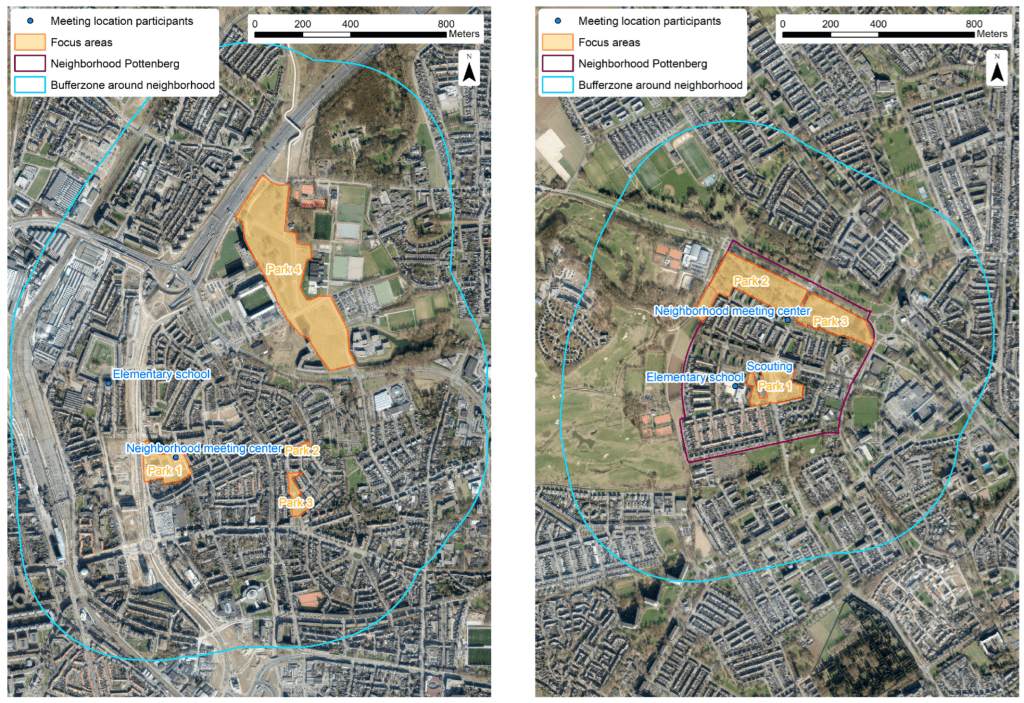
Urban green space (UGS) has important impacts on human health, but an integrated participatory approach to UGS design for improved residents’ health has been lacking to date. The aim of our study was to develop and evaluate such a novel approach to address this gap. The approach was developed following guiding principles from the literature and tested with groups of children and elderly as participants in two neighborhoods of Maastricht (The Netherlands) with a low score in economic and health indicators.

The novel aspects of the approach are the inclusion of both positive and negative health effects, the combination of resident self-assessment and model-based assessment of the health effects of UGS designs, and the use of maps to visualize UGS designs and health effects. The participant-generated UGS designs resulted in a considerable (up to fourfold) self-assessed increase in the use of the UGSs for meeting, stress reduction, and leisure-based physical activity as compared to the current situation.

The model-assessed positive and negative health effects of the participant-generated UGS designs were limited: heat stress slightly decreased (by 0.1 °C), active transport slightly increased (by 30 m per day), and the perceived unsafety slightly increased (8%). The effects on unattractive views, air pollution, tick bite risk, and traffic unsafety were negligible.

The major strength of this approach is that it combines active participation of residents in UGS (re)design with assessment of the health effects of these UGS designs. While in other participatory approaches to UGS design, it often remains unclear whether the resulting designs represent an improvement in terms of health, our combination of computer model-based assessment and a participatory process produced clear outcomes regarding the health benefits and use of UGS designs. A major recommendation for improvement is to involve decision makers already in the initial steps of the approach.

Read the full paper here: Oosterbroek, B., de Kraker, J., Akkermans, S., Esser, P., Martens, P. (2024). Participatory Design of Urban Green Spaces to Improve Residents’ Health. Land13, 88. https://doi.org/10.3390/land13010088