Category Archives: Biodiversity

Nature’s Guardians: How Predators and Scavengers Protect Planetary Health

When we think of wolves, vultures, bats or goannas, we might picture danger, disease, or inconvenience. But science is telling us a different story — one that positions these often-feared species as unsung heroes in the fight for a healthier planet.

Our recent paper published in BioScience argues that predators and scavengers play vital, underappreciated roles in maintaining ecological balance and even safeguarding human well-being. Far from being threats, these species are ecosystem regulators, quietly delivering public health benefits and economic value.

From Pest Control to Public Health

Take bats, for example. After bat populations in North America were decimated by white-nose syndrome, farmers had to compensate for lost insect control by using more pesticides. The result? A spike in agricultural costs — and alarmingly, a possible 8% increase in infant mortality in affected regions. The link? More insecticides, more environmental exposure, more risk.

And the vultures of India? Their rapid decline in the 1990s (due to a veterinary drug called diclofenac) caused livestock carcasses to pile up, triggering sanitation crises. Researchers estimate this led to over half a million human deaths and a $69 billion economic impact.

Biodiversity That Pays Off

It’s not just about disease. Predators like the New Zealand falcon help protect vineyards from grape-eating birds. Wolves reduce wildlife–vehicle collisions, saving human lives and insurance costs. Even reptiles like the Australian heath goanna help farmers by consuming fly-attracting carcasses that would otherwise impact livestock.

In short: these animals provide services — pest control, waste removal, disease regulation — that we’d otherwise have to pay for. And often, we’re not even aware of their silent labor.

A Call for Smarter Conservation

Yet despite these benefits, predators and scavengers are in steep decline — hunted, poisoned, or crowded out by development. Their role in planetary health is rarely recognized in global biodiversity frameworks. We urge policymakers to formally include these species as indicators in sustainability metrics, aligning with goals like the UN’s Kunming-Montreal Biodiversity Framework.

Of course, coexistence isn’t simple. A lion that controls herbivore populations may also prey on livestock. That’s why the paper calls for a net-benefit approach: weigh the costs and contributions together, rather than making decisions based on fear or folklore.

The Takeaway

Planetary health isn’t just about climate graphs and pollution stats. It’s about recognizing the web of life that supports us — including the toothy, winged, or misunderstood creatures that clean, balance, and heal our ecosystems.

Protecting predators and scavengers isn’t charity. It’s public health insurance, food security, and climate resilience rolled into one — nature’s services, offered daily, free of charge.


Want to dig deeper? The full article is open access via BioScience.

Christopher J O’Bryan, Alexander R Braczkowski, Pim Martens (2025). Predators and scavengers as sentinels for planetary health, BioScience,  https://doi.org/10.1093/biosci/biaf054

How Much Does Climate Change Really Cost Our Health?

The manifold impacts of climate change are also seen in the field of health in most countries. It is particularly so in Africa, whose health systems are amongst the most fragile in the world. In his paper we did a review of existing literature, an analysis of secondary data, and spatio-temporal mapping to identify patterns, challenges, and potential interventions. It showcases the degree of vulnerability of the health systems of African countries to climate change, and describes some measures aimed at increasing their resilience to climate shocks. African health systems face significant challenges due to climate change, necessitating a comprehensive approach to enhance resilience.

Africa is particularly vulnerable to climate change due to its reliance on rainfed agriculture, limited financial resources, and existing health challenges. The effects of climate change exacerbate issues such as food insecurity, water scarcity, and the spread of diseases, leading to a cyclical pattern of poverty and health deterioration. For instance, changing weather patterns can heighten the incidence of vector-borne diseases like malaria, directly impacting public health systems in African countries. International cooperation can foster the sharing of knowledge, resources, and innovative solutions to enhance resilience in vulnerable communities.

Frameworks linking climate change initiatives with health organizations such as the WHO can help develop integrated strategies aimed at mitigating health risks associated with climate variability. This could involve improving surveillance systems for disease outbreaks linked to climatic changes, promoting sustainable agricultural practices, and reinforcing health infrastructure to cope with climate-related emergencies.

Moreover, such cooperation would encourage investments in climate adaptation and mitigation efforts. By pooling resources and expertise, countries can effectively tackle the multi-faceted challenges posed by climate change.

Building partnerships between African governments, international organizations, and local communities can lead to a more coordinated approach in combating the adverse impacts of climate change while safeguarding public health. Ultimately, strengthening these links will not only address immediate challenges but also promote sustainable development in the face of ongoing climate variability.

Read the full paper here: Filho, W. L., Gbaguidi, G.J., Diarrassouba, W. and Martens, P. (2025). Money for health: handling the costs of climate change to African health systems. Journal of Health, Population and Nutrition , 44:86. Doi: https://doi.org/10.1186/s41043-025-00802-9

Een betere relatie met de natuur zal onze gezondheid verbeteren

Onze gezondheid is direct verbonden met de gezondheid van het systeem waarin planten, dieren en hun omgeving samenleven en elkaar beïnvloeden. Bossen zuiveren de lucht, ecosystemen leveren schoon water, en biodiversiteit houdt plagen onder controle. Vleermuizen illustreren deze nauwe verwevenheid tussen natuur en gezondheid. Deze dieren consumeren per nacht honderden insecten, waardoor muggen in toom gehouden worden die ziektes zoals knokkelkoorts en het westnijlvirus kunnen verspreiden. Ze  bieden natuurlijke plaagbestrijding en dragen bij aan een ecologisch evenwicht. Toch verdwijnen vleermuizen door  habitatverlies en regelgeving die hun bescherming niet garandeert. Recente voorstellen van onze woonminister binnen het programma STOER (Schrappen van Tegenstrijdige of Overbodige Eisen en Regelgeving), dat eisen voor verblijfplaatsen voor beschermde diersoorten wilde schrappen, tonen hoe beleid soms de verkeerde richting op gaat. Gelukkig werd dit voorstel weggestemd, maar het probleem blijft: we onderschatten de rol van natuur in onze volksgezondheid.

Gezondheid is geen geïsoleerd concept; het is een weerspiegeling van hoe we omgaan met onze leefomgeving.

Gezondheidsrisico’s

Klimaatverandering, grootschalige landbouw en verstedelijking leiden niet alleen tot natuurverlies, maar vergroten ook gezondheidsrisico’s, zoals de verspreiding van nieuwe ziekten en een toename van allergieën en mentale stress. Ondanks deze dreigingen worden natuurlijke oplossingen nog te vaak genegeerd in beleid en samenleving. Het probleem reikt natuurlijk verder dan vleermuizen. Onze omgang met dieren en ecosystemen vergroot het risico op infectieziekten, zoals bleek de afgelopen jaren tijdens de Q-koortsepidemie tussen 2006 en 2011 en de meer recente COVID-19-pandemie. Intensieve veehouderij, waar dieren dicht op elkaar leven, creëert een broedplaats voor pathogenen. De focus van de gezondheidszorg blijft echter te vaak beperkt tot symptoombestrijding, terwijl de oorzaak – onze verstoorde relatie met de natuur – nauwelijks ter discussie staat. Preventie door het behoud van biodiversiteit en duurzame landbouwsystemen is niet alleen ecologisch, maar ook economisch en maatschappelijk de verstandigste keuze.

Onze huidige welvaart is vaak ten koste gegaan van biodiversiteit, zowel hier als elders. Hoewel technologie en medicijnen onze levensverwachting hebben verhoogd, mag dit niet worden gezien als een vrijbrief om de natuur verder uit te putten. Gezondheid is geen geïsoleerd concept; het is een weerspiegeling van hoe we omgaan met onze leefomgeving. Als we ecosystemen gezond houden, bouwen we ook aan onze eigen veerkracht. De relatie tussen biodiversiteit en gezondheid is complex en helaas wordt het debat over biodiversiteit en ecosysteemdiensten zelden gekoppeld aan gezondheid, terwijl dit juist een krachtig uitgangspunt is. Gezondheid raakt iedereen – onze kinderen, onze gezinnen, onze toekomst. Het is tijd om natuur en gezondheid niet langer te scheiden. Een gezonde samenleving kan niet zonder een gezonde planeet. Laten we werken aan een toekomst waarin biodiversiteit niet alleen wordt gezien als een ecologisch doel, maar als een essentieel onderdeel van ons eigen welzijn.

We moeten leren de wereld om ons heen te zien als onderdeel van ons eigen welzijn.

Vleermuizen en andere diersoorten zijn geen obstakels, maar bondgenoten in de strijd voor een duurzame en gezonde wereld. Particulieren kunnen vleermuiskasten ophangen of tuinen vergroenen. Bouwers en woningcorporaties kunnen nog meer vleermuisvriendelijke ontwerpen integreren in nieuwbouw. Agrariërs kunnen bomenrijen en houtwallen behouden, die als  vliegroute dienen voor vleermuizen. Op beleidsniveau moeten beschermende maatregelen voor diersoorten niet worden versoepeld, maar juist worden versterkt. Daarnaast vraagt de intensieve veehouderij om een kritische herziening.

Het behoud van onze natuur is een investering in onze eigen toekomst. We staan voor een belangrijke keuze: blijven we kortetermijnoplossingen nastreven die de natuur verder uitputten, of zetten we in op een toekomst waarin natuur en gezondheid hand in hand gaan?

Verschenen in het Nederlands Dagblad, 21 januari 2025.

Climate Change and Marine Fisheries

Climate change is not only impacting the oceans but the fishing industry also plays a role in worsening it. Rising sea temperatures and ocean acidification affect live in our oceans, and hence fishing communities and global food supplies. At the same time, fishing activities, like using fuel for boats, add greenhouse gases to the atmosphere.

In this review, we looked at over 140 studies to explore this two-way relationship. We highlight the challenges, like the lack of representation from regions most affected by climate change, and the need for better data and more collaboration between countries. Importantly, we also discuss solutions, such as new management strategies and technologies to make fishing more sustainable and climate-friendly.

If you’re curious about how we can protect both the planet and the people who depend on the oceans, check out our open-access article here:

Xu, Y., Krafft, T. & Martens, P. (2024). The interaction between climate change and marine fisheries: Review, challenges, and gaps. Ocean & Coastal Management, 259, 107479, https://doi.org/10.1016/j.ocecoaman.2024.107479

“Dune” as a Mirror for Our Climate Crisis

Currently, Dune 2 is playing in our theaters. In a time when the climate crisis is becoming increasingly urgent, the science fiction world of Dune provides insight into the challenges our planet faces. At first glance, Frank Herbert’s story from 1965 about power, betrayal, and survival on the desert planet Arrakis seems to have little in common with our contemporary environmental issues. However, Dune is not just an epic adventure but also a parable about ecology, scarcity, and human interaction with the environment.

The ecological crisis on Arrakis, a planet where water is scarcer than gold, serves as a mirror for our world, where the effects of climate change are becoming more tangible. Arrakis, or Dune, is a battleground for limited resources, with the precious ‘spice’ at stake. This fictional element, essential for space travel, power, and life extension, serves as a metaphor for our own global competition for water, food, and energy. The conflict over the spice in Dune reflects the societal unrest we now see due to climate change and resource scarcity.

On the other hand, Dune shows how important adaptation and resilience are. The indigenous Fremen have masterfully adapted to their environment, with innovative methods for water conservation that are essential for their survival. Their lifestyle illustrates the need for our society to find sustainable solutions for environmental challenges such as water management and agricultural practices, adapted to changing climate conditions.

Dune also calls for a deeper ecological awareness and the necessity of a shared responsibility for the well-being of our planet. The aspirations of some characters to transform Arrakis into a more livable world could be seen as the contemporary movements for climate action. This saga also serves as a warning. It shows the destructive paths humanity can take when power, greed, and shortsightedness dominate our relationship with nature.

Thus, Dune is more than a story about interstellar politics and mystical powers. It was in the 1960s, but now more than ever, an urgent call for reflection on our own world. It invites us to critically reconsider the way we live, consume, and interact with our planet. But it also offers hope by showing that change is possible, that through collaboration, innovation, and respect for our planet, a more sustainable and just future is within reach.

Regenerative Economics for Planetary Health and Thrivability: The European Green Deal

This policy brief explains the importance of regenerative economic principles for achieving climate neutrality by 2050. Furthermore, we offer a perspective on why mainstream economic systems are unsustainable by design; as they are a legacy of the earlier mechanistic paradigm of the Industrial Age dominated by Newtonian sciences and Darwinian economics. We will explore how a mechanistic approach for societal and human development leads to economic growth models that operate at the cost of vital planetary boundaries and social ceilings; as such, undermining the planetary health conditions on which all life on Earth depends.

Furthermore, we offer a complete overview of the circular economy principles and explain why circularity principles need to expand through regenerative principles in order to achieve the transition to post-carbon economies. We also emphasise the importance of the human factor in sustainability transitions which tends to be undervalued in many of the mainstream circular economy models.

Yet, more fundamentally, we address how the Circular Economy Action Plan needs to go further by addressing the underlying economic growth models and their systemic barriers. To support policymakers and sustainability leaders, this brief includes several Living Systems Protocols from the EARTHwise Constitution for a Planetary Civilization to explore how to transition to regenerative post-carbon economies where growth is decoupled from use of resources. In particular, how to shift economic design as extractive GDP growth machines within a free-market environment to economies as complex living systems embedded within vital planetary and social carrying capacities.

Finally, we conclude with reflections for a larger global vision based on collective so-called thrivability for people, planet and future generations. We invite decision-makers, influencers, thought leaders and think tanks to embrace a planetary health and thrivability perspective, which goes further than including natural capitals and ecosystem services as costs and assets in economic models.

Read the full Policy Brief (Chapter 5) here: Smitsman, A. & Martens, P. (2024). Regenerative Economics for Planetary Health and Thrivability: The European Green Deal. In: Special Collection Policy Briefs: Circular Economy. Studio Europa, Maastricht University.

Participatory Design of Urban Green Spaces to Improve Residents’ Health

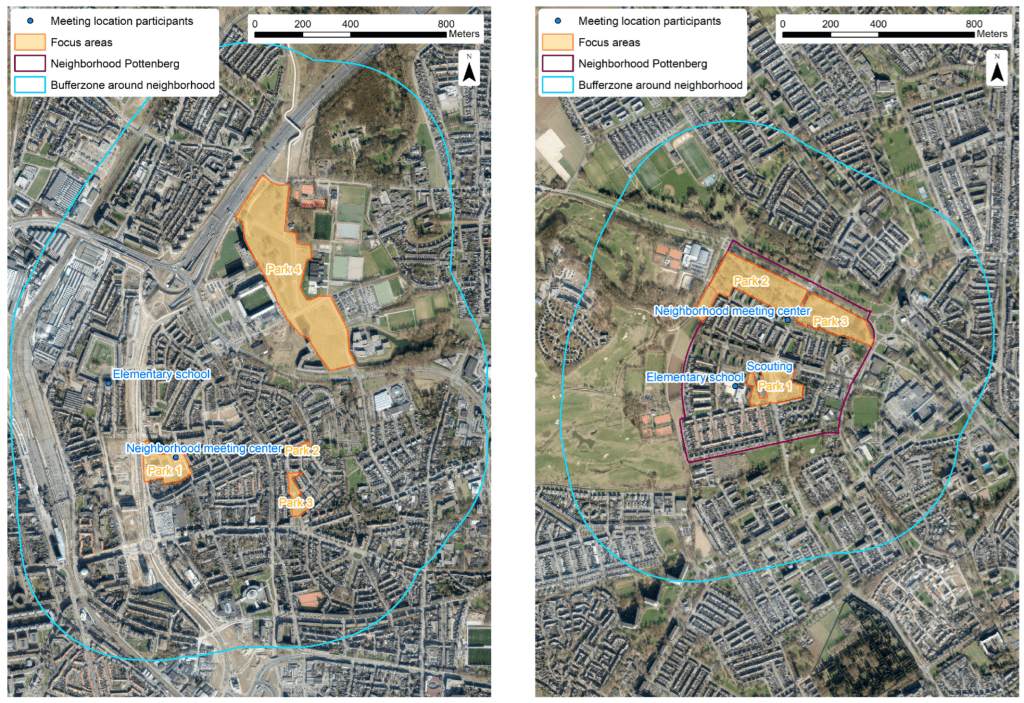
Urban green space (UGS) has important impacts on human health, but an integrated participatory approach to UGS design for improved residents’ health has been lacking to date. The aim of our study was to develop and evaluate such a novel approach to address this gap. The approach was developed following guiding principles from the literature and tested with groups of children and elderly as participants in two neighborhoods of Maastricht (The Netherlands) with a low score in economic and health indicators.

The novel aspects of the approach are the inclusion of both positive and negative health effects, the combination of resident self-assessment and model-based assessment of the health effects of UGS designs, and the use of maps to visualize UGS designs and health effects. The participant-generated UGS designs resulted in a considerable (up to fourfold) self-assessed increase in the use of the UGSs for meeting, stress reduction, and leisure-based physical activity as compared to the current situation.

The model-assessed positive and negative health effects of the participant-generated UGS designs were limited: heat stress slightly decreased (by 0.1 °C), active transport slightly increased (by 30 m per day), and the perceived unsafety slightly increased (8%). The effects on unattractive views, air pollution, tick bite risk, and traffic unsafety were negligible.

The major strength of this approach is that it combines active participation of residents in UGS (re)design with assessment of the health effects of these UGS designs. While in other participatory approaches to UGS design, it often remains unclear whether the resulting designs represent an improvement in terms of health, our combination of computer model-based assessment and a participatory process produced clear outcomes regarding the health benefits and use of UGS designs. A major recommendation for improvement is to involve decision makers already in the initial steps of the approach.

Read the full paper here: Oosterbroek, B., de Kraker, J., Akkermans, S., Esser, P., Martens, P. (2024). Participatory Design of Urban Green Spaces to Improve Residents’ Health. Land13, 88. https://doi.org/10.3390/land13010088

Teaching and Learning for Sustainability Science in a Rapidly Warming World

We are in an era of unprecedented ecological and social crises. Human activity has led to the transgression of six of the nine planetary boundaries—including the novel entities boundary, which refers to geological changes that could have large-scale impacts that threaten the integrity of the Earth system processes . This environmental degradation has driven one in five species to extinction.

Further, warming-induced extreme weather events, such as drought, wildfires and flooding, have increased in number and intensity, resulting in widespread suffering and loss of life. Despite political commitments, most governments are failing to take the necessary actions to ensure that the global average temperatures do not surpass 1.5° warming above pre-industrial levels. Alarmingly, global fossil CO2 emissions continued to increase in 2021 and 2022 after dipping by 5.4% in 2020 due to widespread COVID-19 lockdowns. Furthermore, 2015 to 2022 were the eight warmest since the instrumental record began in 1850, despite 3 consecutive years of a cooling La Niña.

The window to control global warming is rapidly closing. On the current trajectory, humankind is set to cause an average temperature rise of 2.8° by the end of the century. In this context, the work of sustainability scientists is becoming increasingly important and challenging. In light of this reality, we argue that we must reconsider the core tenants of transdisciplinary sustainability science. To this end, we propose a model for teaching and learning sustainability as an example of how we might adapt our approach to the pressure of the contemporary context. In a novel way, we model transdisciplinarity. This paper is the product of the Education in a Warming World Research Consortium, supported by Worldwide Universities Network. The consortium comprises university academics with broad expertise in education, sociology, climate change, science communication, health, sustainability, and human behaviour. Our group members share a commitment to transdisciplinary work dedicated to understanding the evolving role of education in this era of rapid climatic change and overlapping socio-ecological crises.

Read the full paper here: Kelly, O., White, P., Butera, F., Illingworth, S., Martens, P., Huynen, M., Bailey, S., Schuitema, G. & Cowman, S. (2023).  A transdisciplinary model for teaching and learning for sustainability science in a rapidly warming worldSustainability Science, https://doi.org/10.1007/s11625-023-01407-z

Health Impacts and Benefits of Urban Green Space 

Both urbanization and climate change can be expected to aggravate several major human health problems.  An example is mental health: when urbanization increases, incidence rates of psychosis and depression also rise. Other relevant health problems in this respect are those associated with heat stress, air pollution and vector-transmitted infections.

A common characteristic of these urban health problems is that they are significantly affected by urban spatial design. A major element of urban spatial design is urban greenspace (UGS), which is more and more seen as a leverage point to address such urban health challenges.

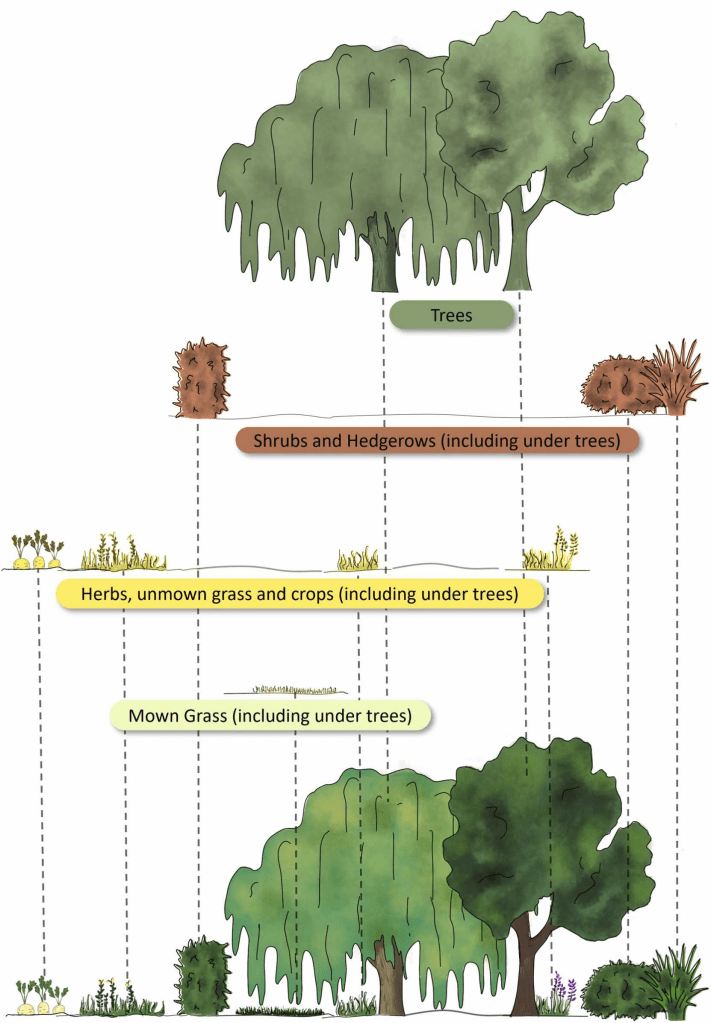
In this paper, we present a new model, with the aim to address the shortcomings of existing methods and tools, and to meet the needs of urban spatial planners for quantitative, spatially explicit assessment of both the beneficial and detrimental impacts of UGS on human health. The model, named Urban-EcoMATCH (Urban Ecosystems Mapping and Assessment Tool of Costs and Benefits for Health), is applied it to the city of Maastricht (The Netherlands) with a (multi)hotspot analysis for five major urban health issues.: ‘Unattractive views’ (contributing to, e.g., psychological stress), ‘Heat stress’ (contributing to, e.g., heat stroke), ‘Air pollution’ (contributing to, e.g., respiratory diseases), ‘Perceived unsafety’ (contributing to, e.g., psychological stress), and Tick-bite risk’ (contributing to, e.g., Lyme disease).

With the model we were able to identify the hotspots, the areas within a city where urban design-related health problems are the largest. The hotspot analysis did not only provide concrete results for a specific city, but also generated more general insights into which spatial design-related health issues often occur together, and how greening strategies could reduce health burdens and/or enhance health benefits in these hotspots by paying attention to design aspects, especially to UGS type and location.

Read the full paper here: Oosterbroek, B., de Kraker, J., Huynen, M., Martens, P. & Verhoeven, K. (2023). Assessment of green space benefits and burdens for urban health with spatial modeling, Urban Forestry & Urban Greening, 86, 128023, doi.org/10.1016/j.ufug.2023.128023.

Planetary Health: The Recipe for a Sustainable Future

The concept of Planetary Health is too human-oriented. The emphasis here is mainly on the consequences for our health through global environmental disturbances. Later definitions are already better, with the focus more on the health of our planet and the realization that human health ultimately depends on the health of the planet. For example, climate change and the decrease in biodiversity are unhealthy for the earth and everything that lives on it, including humans. However, the field of Planetary Health is more than that. It is not only the realization that everything is connected, but also the realization that it is not nearly enough to keep the planet ‘as it is’. Positive, regenerative development must take place to keep the planet and everything on it healthy. This also includes a different way of dealing with our earth, a change of perspective. When we respect our planet, we respect life, we respect ourselves. That is also what I believe Planetary Health stands for. Taking sustainability to the next level!

Read, watch or listen to my inaugural address regarding the Chair Planetary Health below: