Pim Martens has a PhD in applied mathematics ànd biological sciences, is professor of planetary health, a scientivist, and integrates scientific knowledge with his passion for animals and nature.
Interview with Harrie Smeets, a Dutch Roman Catholic bishop. Since December 8, 2018, he has been the 24th bishop of the diocese of Roermond and has chosen as a motto: love people in God’s name.
Our dominant current socio-economic and political systems have become decoupled from the larger ecology of life. Our relationship with the natural environment and animals has changed dramatically over time. My Fellowship ‘Ethics of the Anthropocene‘ (Vrije Universiteit Amsterdam) intends to discuss these past patterns and future pathways with representatives of various indigenous cultures and religious beliefs. Learning from them about our relationship with animals may be a way we can begin to address the sustainability challenges we see today.
Above the fifth interview in this series. More interviews will follow!
Almost every scientist recognizes this. Having devoted much of your live to perform research on a specific issue, but not being able to get the message outside the academic walls. This holds for the more fundamental sciences, but even more so for research on more complex issues, like climate change, poverty, biodiversity loss, financial-economic crisis, and the current corona pandemic.
Isn’t it funny, that a society that pays lots of money to universities and research centres, that does value teaching and research done at these places highly, but then dismisses the results of these institutes if it is not ‘handy’, and perhaps a little too vague?
Of course, many scientists are to be blamed as well. Being so caught up in their own scientific square centimetre, they are unable to communicate the main message of their research to others. Stimulated by the perverse publication system that only accounts for peer-reviewed publications , people outside academia are only left with scientific papers. Not very useful I would say.
Universities have responded to this through the start of new fields of research, such as sustainability science, focusing on research collaborations among scientists from different disciplines and non-academic stakeholders from business, government, and the civil society. The idea behind this is that we all need to work together in order to address sustainability challenges and develop real solutions.
From a scientific point of view, this is fine. But what about the point of view of moving forward to a more sustainable world? Does this not oblige scientists to take more responsibility, especially at times when many signals in nature and society are red? Or do we (scientists) continue to discuss the rules under which ‘sustainability science’ needs to be operated? Do we continue discussing adjustments to current, not-sustainable systems instead of changing them? Do we continue to discuss the circular economy, but forgetting to discuss the unsustainability of the economic growth paradigm?
Experts should step out of their ivory towers to get involved more actively in the social debate. So it is about time for many more scientists to become scientivists. Scientivists are people that are engaged in scientific research, but also try to promote, impede, or direct societal change (the ‘activist part’). Scientivism can take a wide range of forms, from writing letters to newspapers or politicians, to economic activism, such as boycotts, etc. Scientivists should also take responsibility to transform the often, not-sustainable universities they are part of. It is also good to realize that there are different species of scientivsts
In a first form, the scientivist acts as a public intellectual and his or her scientific work and social involvement are largely separate from each other. Albert Einstein’s commitment to world peace and civil rights provides a good example. None of those things have much to do with physics. However, Einstein felt that he (like any citizen) had a role to play in the moral and social debates of his time. As a well-known scientist, he also easily found his way to the media.
In other cases, scientific research is the direct starting point of activism.Rachel Carson’s fight against DDT provides a good illustration of such science-driven activism. As a biologist with the U.S. Fish and Wildlife Service, Carson had access to data that demonstrated the harmful effects of DDT on animals and humans. She then started an active campaign against the use of DDT with her well-known book Silent Spring.
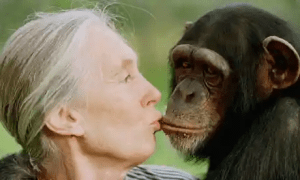
Jane Goodall is another scientivist in this category. Goodall is best known for her study of chimpanzees. She found that it is not only human beings who have personality, but that chimpanzees are capable of rational thought and emotions as well. She also saw behaviors such as hugs and kisses in the chimpazees she observed. Later on, she became a global leader in the effort to protect chimpanzees and their habitats.
In a third mixture of science and social involvement, the ideals do not arise from scientific work but precede it. A good example here is conservation biology as propagated by Edward Wilson. This field of science assumes that the protection of species is a good thing, and calls on science to organize that protection in an efficient way. This also shows that science is not always neural or objective. Conservation biology is not neutral, but it can provide objective criteria for efficient protection.
Einstein could appeal to a critical sense, great reading, and moral awareness – but none of these are, of course, exclusive qualities of the scientist. By the end of the day, we are all – like Greta – concerned people who see that our current path is not sustainable. We also know – like Greta – that there are good alternative futures and we are willing to fight for it – in any way we can.
I am not Greta – but you do not need to be a Greta to make a difference. Greta has shown that everybody can make a difference. And this movies will show it again.
“With planet earth at risk, why do you fuzz over gender and diversity issues rather than prioritizing current ecological challenges? Is societal discrimination the most pressing problem when humankind’s survival is at stake?” Questions such as these are not uncommon. However, they suggest a false opposition. Environmental problems and concerns with social equity do not compete with each over pride of place on academic and political agenda’s. On the contrary, they are directly related in that they both feed off a common ground. In this webinar, Pim Martens and Lies Wesseling will expose this common ground, by revealing how the exploitation of humans and non-humans are both rooted in an instrumentalist conception of nature. They will also sketch the contours of alternative conceptions of the more-than-human world.
All members of the UM community are warmly invited to participate. This webinar is also part of the Maastricht Summerschool on Human and Animal Relations and Interactions taking place on November 21 and 22, 2020. Participation is free but you need to enroll before November 20, 2020, by send an email to: Lies.Wesseling@Maastrichtuniversity.nl.
Speakers:
Pim Martens, Professor of Sustainable Development, Chair Platform Human and non-human Animal Relations, and Interations (HARI, FASoS), and Senior Fellow in the Ethics of the Anthropocene Program at the Vrije Universiteit Amsterdam.
Lies Wesseling, director Centre for Gender and Diversity and Professor of Cultural Memory, Gender and Diversity at the Faculty of Arts and Social Sciences.
Interview with Jayasinhji Jhala, the 47th Jhallesvar His Highness Maharaja Sriraj of Halvad- Dhrangadhra and the cultural custodian of the Peoples of Jhalavad and protector of all life forms.
Our dominant current socio-economic and political systems have become decoupled from the larger ecology of life. Our relationship with the natural environment and animals has changed dramatically over time. My Fellowship ‘Ethics of the Anthropocene‘ (Vrije Universiteit Amsterdam) intends to discuss these past patterns and future pathways with representatives of various indigenous cultures and religious beliefs. Learning from them about our relationship with animals may be a way we can begin to address the sustainability challenges we see today.
Above the fourth interview in this series. More interviews will follow!
Though we live with them, eat them, love them, and wear them, we give very little academic attention to the roles of animals in society. The underlying theme of the course will be re-evaluating our understandings of animals and gauging the individual and collective responsibilities that we, as humans, must negotiate with non-human animals.
This course will also explore and consider the different types of relationships between animals and humans in contemporary society from e.g. a historical, social and linguistic perspectives. Topics include companion animals, animal communication and emotions, animal-assisted therapy.
At the end of this course, students should able to: • exhibit strong critical thinking skills in their study of the interactions between humans and nonhuman animals and of the roles of nonhuman animals in human society. • synthesize interdisciplinary information as it relates to anthrozoology. • identify strengths and weaknesses in arguments regarding human and nonhuman animals. • construct a written, evidence-based argument on a HARI topic.
Furthermore, the students will: • Understand different perspectives regarding animals • Understand the state-of the–art of animal emotions and animal communication
This is an interdisciplinary course, so open for all students with a genuine interest in critical animal studies and how we, as humans, interact with them.
Interview with Audelino Sac Coyoy, a Maya-K’iche’ priest and political scientist who currently teaches at the Universidad Rafael Landívar Campus de Quetzaltenango in Guatemala.
Our dominant current socio-economic and political systems have become decoupled from the larger ecology of life. Our relationship with the natural environment and animals has changed dramatically over time. My Fellowship ‘Ethics of the Anthropocene‘ (Vrije Universiteit Amsterdam) intends to discuss these past patterns and future pathways with representatives of various indigenous cultures and religious beliefs. Learning from them about our relationship with animals may be a way we can begin to address the sustainability challenges we see today.
Above the third interview in this series. More interviews will follow!
Climate change poses serious challenges for humans around the world. Global warming is perceived as one of the biggest global health risks of the twentieth century which could have a range of effects on human health. Global warming is thought to have an impact on vector-borne disease, water-related disease, heat- and cold- related deaths, allergies, air pollution and malnutrition. The projected increases in extreme climate events such as floods, droughts, and possible intense tropical cyclones could also have wide ranging direct and indirect effects on health. Although the effect of climate change will be experienced worldwide, its impact will not be evenly distributed among people. In low income countries, climate change is believed to further exacerbate existing vulnerability to disease and food security risks, as their populations are, for instance, more reliant on agriculture, more vulnerable to droughts and have a lower adaptive capacity. As climate change can be seen as an amplifier of existing and emerging health risk, it might increase health inequalities and is likely to widen the health gap between rich and poor.
If you’d like to know more about the causes and implications of climate change, then register here for the fall evening edition for this course at Maastricht University before October 15.
Interview with Phil Lane Jr. Phil is an enrolled member of the Ihanktonwan Dakota and Chickasaw Nations. Chief Phil Lane Jr. is an internationally recognized indigenous leader in human and community development.
Our dominant current socio-economic and political systems have become decoupled from the larger ecology of life. Our relationship with the natural environment and animals has changed dramatically over time. My Fellowship ‘Ethics of the Anthropocene‘ (Vrije Universiteit Amsterdam) intends to discuss these past patterns and future pathways with representatives of various indigenous cultures and religious beliefs. Learning from them about our relationship with animals may be a way we can begin to address the sustainability challenges we see today.
Above the second interview in this series. More interviews will follow!
“I think we should be more outspoken when we see the detrimental effects of our activities to the natural environment and the animals within. In this book, without claiming to cover the full complexity, I explore the relationships between human and non-human animals. This ranges from our bound with close companions like cats and dogs, to public attitudes towards exotic animals living far way or in zoos. I also argue that animal welfare should be central in the sustainability debate: what I term ‘sustanimalism’ (in Dutch, the combination of ‘dieren’ (animals), and ‘duurzaamheid’ (sustainability) leads to the neologism ‘dierzaamheid’). More respect for animals and nature is key to a sustainable society.” – Pim Martens
Interview with Anita Sanchez. Anita was born into a Midwest family that was economically poor, yet rich in Mexican-American and Aztec Indian heritage. She specializes in indigenous wisdom, diversity and inclusion, leadership, culture and promoting positive change in our world.
Our dominant current socio-economic and political systems have become decoupled from the larger ecology of life. Our relationship with the natural environment and animals has changed dramatically over time. My Fellowship ‘Ethics of the Anthropocene‘ (Vrije Universiteit Amsterdam) intends to discuss these past patterns and future pathways with representatives of various indigenous cultures and religious beliefs. Learning from them about our relationship with animals may be a way we can begin to address the sustainability challenges we see today.
Above the first interview in this series. More interviews will follow!






 PIM MARTENS