Zijn dierentuinen nog wel van deze tijd?

Leeuwen in een van de verblijven in GaiaZoo. — © Peter Schols

Vorige maand was er nogal wat commotie over dierenwelzijn in Mondo Verde in Landgraaf. Het Limburgse attractie- en dierenpark ligt onder vuur op social media. In een Facebook-bericht kraakt een Belgische dierentuinliefhebber de trekpleister in Landgraaf volledig af. De discussie laait nu weer op: zijn dierentuinen nog wel van deze tijd?

Zie ook Opinie Pagina De Limburger (3 januari 2024).

Miljoenen mensen wereldwijd bezoeken jaarlijks een of meer dierentuinen. Ook in Nederland is een dagje naar de dierentuin voor velen een favoriet uitje. Toch komen dierentuinen de laatste jaren steeds meer in opspraak. Is dat terecht? Het is fascinerend dat de meningen over het houden van dieren in deze vorm van gevangenschap zo enorm verschillen, zelfs, en misschien juist vooral, onder mensen die van dieren houden. Waarom is dit zo’n complex onderwerp?

Om te beginnen kan je dierentuinen natuurlijk niet allemaal over een kam scheren: de ene is de andere niet. En de afgelopen eeuwen hebben dierentuinen gevarieerde rollen gespeeld in de samenleving: zij zijn geëvolueerd van verzamelaars van dieren tot wetenschapscentra, van recreatieve attracties tot pleitbezorgers voor het behoud van diersoorten. Het doel van moderne dierentuinen is echter nog steeds niet voor iedereen even duidelijk. Naast het amusementsaspect behouden ze diersoorten, vangen exotische dieren op en informeren mensen over het leven en de bedreigingen van de tentoongestelde diersoorten. Sommige dierentuinen profileren zich vaak echter nog te veel als een attractie, ‘een leuk dagje uit’. De nadruk komt gelukkig wel steeds meer te liggen op de invloed en verantwoordelijkheid die bezoekers zelf hebben, waarbij een bezoek wat minder vrijblijvend is en educatie en in actie komen belangrijker worden.

Dierentuinen doen ook hun best om bezoekers te wijzen op de problemen waarmee de soortgenoten van bedreigde dierentuindieren mee geconfronteerd worden. De vraag is echter of dierentuinbezoekers dan wel naar huis gaan met meer kennis en de intentie er alles aan te doen om de dieren die ze net gezien hebben te helpen beschermen? Wetenschappelijke onderzoeken en polls van dierentuinen zelf onderschrijven dit niet altijd.

Hoewel dierentuinen onder de meerderheid van de bevolking nog steeds heel populair zijn, wordt de roep om verandering steeds luider. De betere, moderne dierentuinen hebben de laatste tientallen jaren grote stappen gemaakt, om het leven van de dieren die ze verzorgen te verbeteren. Maar laten we eerlijk zijn, als dierentuinen niet het publiek maar werkelijk de dieren centraal stellen, zouden zij er heel anders uitzien.

Een belangrijker vraag is denk ik of de dieren gelukkiger zijn in een dierentuin dan in het wild? Tegenstanders zijn uiteraard van mening dat dit absoluut niet het geval is en dat gevangenschap dieren ongelukkig maakt. Volgens Jane Goodall zijn moderne dierentuinen zeker geen slechte plek om te verblijven: ‘De natuur is geen idyllische plek. Sommige dieren zouden niet in dierentuinen gehouden moeten worden, zoals olifanten, orka’s, beloega’s, maar voor andere dieren kan een dierentuin te prefereren zijn boven een leven in het wild.’ Hoewel volgens Jane Goodall zelfs de beste, meest geavanceerde verblijven niet kunnen tippen aan de natuurlijke leefomgeving, worden ongerepte gebieden steeds kleiner. De menselijke bevolking groeit en wilde dieren worden bedreigd door stroperij, houtkap en habitatverlies. Tijd dus voor meer respect voor de dieren en hun natuurlijk leefgebieden.

Dankzij meer kennis en empathie maken bezoekers (en mensen die besloten hebben geen dierentuinen meer te bezoeken), zich steeds drukker om het welzijn van dieren in gevangenschap. Volgens een enquête van de raad voor Dierenaangelegenheden vindt zes op de tien Nederlanders dat als dieren niet hun natuurlijk gedrag kan vertonen, ze niet in een dierentuin zou moeten worden gehouden. Op de vraag of dierentuinen verboden zouden moeten worden, zegt – in dezelfde enquête – de helft van wel of weet het niet. Zoals het verhaal van Mondo Verde illustreert zullen in ieder geval dierentuinen en -parken in hun beleidsvoering en investeringen steeds meer rekening moeten houden met de veranderende publieke opinie.

Sacred Nature: Non-Western Voices about Animals, People, and Climate

Order here

Ook hier in het Nederlands beschikbaar.

In this book, twelve indigenous and religious leaders from different parts of the world speak about the sacredness of nature. Their age-old wisdom inspires us to think differently about how we deal with everything that lives. The Greenlandic shaman Angakkorsuaq, the American Indian leader Chief Lane Jr., Masai leader Mwarabu, the Buddhist nun Shih, the Islamic poet Ur Rehman Chishti, Orthodox rabbi Slifkin, Mayan priest Sac Coyoy, Hindu prince Jhala, Aztec leader Sanchez, leader of the Canadian Bear Clan Wawatie, Bishop Smeets of Roermond and theologian Valerio of Rochester Cathedral.

See the interviews here.

Cat Owners’ Perceptions of Feline Emotions

Many cat owners describe the relationship with their cat in anthropomorphic terms like child or best friend. Attributing such human social roles to cats might influence the interpretation of cat behavior and communicative cues. Over 1800 Dutch cat owners filled out an online survey concerning the relationship with, and behavior of, their own cat and beliefs about the emotional lives of cats in general. Owners were also presented with seven photographs of cats (four with reliable cues to identify an emotion and three neutral ones).

52% of the respondents described the relationship with their cat in human terms such as family member (52%), as a child (27%) or as best friend (6%) while 14% described their cat as a pet animal. Owners who described the relationship with their cat in human terms, more often a) assigned complex social emotions (such as jealousy and compassion) to cats and b) assigned emotions to neutral photographs. Owners with a realistic perception of cat emotions were better at correctly identifying the emotional photographs. Moreover, owners that attributed complex social emotions to cats in general had a higher tendency to attribute emotions to the neutral photographs.

Our study shows that the correct interpretation of feline emotional cues from photographs are negatively associated with owners’ anthropomorphic perception of cats. This study highlights the importance of educating owners about natural cat behavior and realistic views of the emotional life of (their) cats.

Read the full paper here: Bouma, E.M,C., Reijgwart, M.L., Martens, P., Dijkstra, A. (2023). Cat owners’ anthropomorphic perceptions of feline emotions and interpretation of photographs. Applied Animal Behaviour Science, 2023, 106150, https://doi.org/10.1016/j.applanim.2023.106150

Planetaire Gezondheid: het recept voor een duurzame toekomst

Het concept van Planetaire Gezondheid is vaak te antropocentrisch. De nadruk ligt dan voornamelijk op de gevolgen voor onze gezondheid door mondiale verstoringen van het milieu. Meer nadruk op de gezondheid van onze planeet is nodig, en het besef dat de gezondheid van de mens uiteindelijk afhankelijk is van de gezondheid van de planeet. Bijvoorbeeld, klimaatverandering en het afnemen van biodiversiteit zijn ongezond voor de aarde en alles wat erop leeft, inclusief mensen. Het vakgebied van Planetaire Gezondheid is echter nog meer dan dat. Het is niet alleen het besef dat alles met elkaar verbonden is, maar ook het besef dat het niet genoeg is om de planeet ‘zoals die is’ te houden. Er moet positieve, regeneratieve ontwikkeling plaatsvinden. Dit kan echter niet zonder dat we anders gaan denken over onze plaats hier op aarde. Gezonde menselijke samenlevingen kunnen niet bestaan op een stervende planeet. We moeten ons dus verwonderen en weer opnieuw verbinden met de natuur. Als je de aarde respecteert, respecteer je het leven en respecteer je jezelf.

Meer over deze publicatie hier: Martens, P. (2023). Planetaire Gezondheid: het recept voor een duurzame toekomst. Quintesse, 12 (4), 12-19.

Outcomes from the First European Planetary Health Congress

The First European Planetary Health Congress, held from 5 to 7 July 2023 at ARTIS in Amsterdam, represented a significant milestone in the global movement of Planetary Health. The event brought together 121 attendees from academia and the private sector dedicated to addressing the impact of human disruptions to natural systems on the well-being of life on Earth. Co-organized by Natura Artis Magistra (ARTIS) and the European Hub of the Planetary Health Alliance (PHA), the Congress featured five workshops: The Future of Planetary Health Cities, Impact through Synergy, Planetary Health Education, Movement Building, and Food and Microbes. Oral presentations addressed the theme of how human health and the health of human civilization depend on the natural environment, including subthemes on Earth, Water, and Food. Additionally, the subtheme of Humans reflected on how humanity can thrive within Planetary Boundaries and how to imagine a prosperous future for all life on Earth. The First European Planetary Health Congress offered a platform for fostering sustainable, just, and equitable societies within ecological limits. Accordingly, ARTIS and the European Hub aim to shape a hopeful future for generations to come.

Read the full paper here: Kort, R.; Arts, K.; Antó, J.M.; Berg, M.P.; Cepella, G.; Cole, J.; van Doorn, A.; van Gorp, T.; Grootjen, M.; Gupta, J.; et al. Outcomes from the First European Planetary Health Congress at ARTIS, Amsterdam. Challenges 2023, 14, 49. https://doi.org/10.3390/challe14040049

Policy Integration of Climate Change Adaptation in Central America

Central American countries have been described as highly exposed to the negative effects of climate change . Policies dedicated to climate change and climate policy integration—mainstreaming—into sectoral policies have been considered key strategies. This article studies the level of integration of climate-change adaptation considerations into three prioritized sectors—general development planning, risk management, and land-use planning—by applying three criteria for policy integration—inclusion, consistency, and weighting. The results show a progressive trend to integrate adaptation into the policy outputs of the three sectors in all countries. Still, the operational level of instruments in some cases fails to fulfill the mandates to mainstream climate adaptation, and consistency is limited. These failures are indicators of lower levels of organizational maturity, which has also been detected in other developing countries and is connected to conflict and tradeoff avoidance behaviors as a filtering strategy to ensure progress at the cost of leaving key issues outside the mainstreaming process.

Read the full paper here: Segura, L.D., Van Zeijl-Rozema, A., Martens, P. (2023). Policy integration of climate change adaptation in Central America: A review for development, land-use planning, and risk management. Latin American Policy,  https://doi.org/10.1111/lamp.12314

Stakeholder Participation for Nature-Based Solutions

The nature-based solutions (NbS) approach states that achieving the multiple benefits of nature for health and well-being requires wider stakeholder collaboration and integration of nature into the policies. As a holistic and leading concept, NbS has become progressively more diversified and systematic as a starting point in the process of continuously responding to the global demand for sustainable development. Due to the current pressure of rural modernization and industrialization, rural areas are facing social and environmental challenges such as a lack of cultural identity, low democratic participation, and the destruction of landscape ecology, especially in China, a large and representative developing country.

Based on stakeholder participation for NbS project collaboration being increasingly recognized as a promising approach, this study first reviews the current findings and outlines stakeholder participation for NbS from five perspectives: policies, benefits, challenges, methods, and frameworks. Although there is a rich amount of corresponding research results, the various research perspectives are scattered; in particular, there is a lack of research on indigenous participation perspectives, which has not yet developed a systematic way of thinking.

Read the full paper here: Liu, H. & Martens, P. (2023). Stakeholder Participation for Nature-Based Solutions: Inspiration for Rural Area’s Sustainability in China. Sustainability, 15(22), 15934, https://doi.org/10.3390/su152215934

Teaching and Learning for Sustainability Science in a Rapidly Warming World

We are in an era of unprecedented ecological and social crises. Human activity has led to the transgression of six of the nine planetary boundaries—including the novel entities boundary, which refers to geological changes that could have large-scale impacts that threaten the integrity of the Earth system processes . This environmental degradation has driven one in five species to extinction.

Further, warming-induced extreme weather events, such as drought, wildfires and flooding, have increased in number and intensity, resulting in widespread suffering and loss of life. Despite political commitments, most governments are failing to take the necessary actions to ensure that the global average temperatures do not surpass 1.5° warming above pre-industrial levels. Alarmingly, global fossil CO2 emissions continued to increase in 2021 and 2022 after dipping by 5.4% in 2020 due to widespread COVID-19 lockdowns. Furthermore, 2015 to 2022 were the eight warmest since the instrumental record began in 1850, despite 3 consecutive years of a cooling La Niña.

The window to control global warming is rapidly closing. On the current trajectory, humankind is set to cause an average temperature rise of 2.8° by the end of the century. In this context, the work of sustainability scientists is becoming increasingly important and challenging. In light of this reality, we argue that we must reconsider the core tenants of transdisciplinary sustainability science. To this end, we propose a model for teaching and learning sustainability as an example of how we might adapt our approach to the pressure of the contemporary context. In a novel way, we model transdisciplinarity. This paper is the product of the Education in a Warming World Research Consortium, supported by Worldwide Universities Network. The consortium comprises university academics with broad expertise in education, sociology, climate change, science communication, health, sustainability, and human behaviour. Our group members share a commitment to transdisciplinary work dedicated to understanding the evolving role of education in this era of rapid climatic change and overlapping socio-ecological crises.

Read the full paper here: Kelly, O., White, P., Butera, F., Illingworth, S., Martens, P., Huynen, M., Bailey, S., Schuitema, G. & Cowman, S. (2023).  A transdisciplinary model for teaching and learning for sustainability science in a rapidly warming worldSustainability Science, https://doi.org/10.1007/s11625-023-01407-z

Health Impacts and Benefits of Urban Green Space 

Both urbanization and climate change can be expected to aggravate several major human health problems.  An example is mental health: when urbanization increases, incidence rates of psychosis and depression also rise. Other relevant health problems in this respect are those associated with heat stress, air pollution and vector-transmitted infections.

A common characteristic of these urban health problems is that they are significantly affected by urban spatial design. A major element of urban spatial design is urban greenspace (UGS), which is more and more seen as a leverage point to address such urban health challenges.

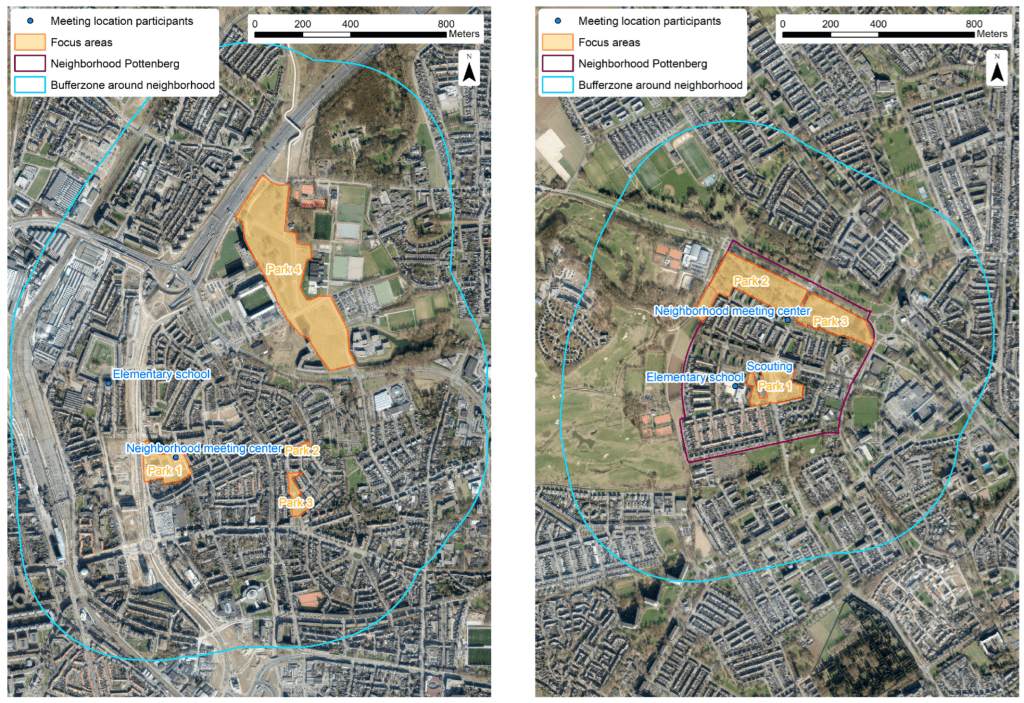
In this paper, we present a new model, with the aim to address the shortcomings of existing methods and tools, and to meet the needs of urban spatial planners for quantitative, spatially explicit assessment of both the beneficial and detrimental impacts of UGS on human health. The model, named Urban-EcoMATCH (Urban Ecosystems Mapping and Assessment Tool of Costs and Benefits for Health), is applied it to the city of Maastricht (The Netherlands) with a (multi)hotspot analysis for five major urban health issues.: ‘Unattractive views’ (contributing to, e.g., psychological stress), ‘Heat stress’ (contributing to, e.g., heat stroke), ‘Air pollution’ (contributing to, e.g., respiratory diseases), ‘Perceived unsafety’ (contributing to, e.g., psychological stress), and Tick-bite risk’ (contributing to, e.g., Lyme disease).

With the model we were able to identify the hotspots, the areas within a city where urban design-related health problems are the largest. The hotspot analysis did not only provide concrete results for a specific city, but also generated more general insights into which spatial design-related health issues often occur together, and how greening strategies could reduce health burdens and/or enhance health benefits in these hotspots by paying attention to design aspects, especially to UGS type and location.

Read the full paper here: Oosterbroek, B., de Kraker, J., Huynen, M., Martens, P. & Verhoeven, K. (2023). Assessment of green space benefits and burdens for urban health with spatial modeling, Urban Forestry & Urban Greening, 86, 128023, doi.org/10.1016/j.ufug.2023.128023.

Understanding food cultures are important for reducing dietary environmental impacts

Our food consumption patterns play a major role in determining both human and planetary health. A substantial body of evidence has shown that the current worldwide food consumption is not only contributing to 19–29% of greenhouse gas (GHG) emissions, but is also responsible for using 37% of the Earth’s landmass.

Furthermore, worldwide rising income and urbanization have contributed to the dietary transition from plant-based products to more animal-based diets, and the category of “meat and meat products” contributes most to the environmental footprint in many parts of the world. The situation is expected to get worse as more populations are experiencing dietary transition, resulting in asymmetrical environmental degradation around the world.

Our study highlighted the importance to better understand the effects of geographical location and related food cultures for reducing the dietary environmental impacts. The present study also indicated that meat was the main source of the dietary environmental footprint in contemporary China, while the over-consumption of meat is severe for all groups of Chinese people.

Reversing this trend in China and other countries, and increasing the consumption of foods that are consistently associated with low environmental impacts, would undoubtedly have multiple environmental benefits. Hence, more interventions that seek to change people’s food consumption behaviors are specifically needed. This will require a better understanding of how individuals’ dietary behaviors are influenced by the interaction effect of economic conditions and dietary cultures within which individuals are embedded, not only in China but also in other countries with diverse food cultures.

Read the full paper here: Su, B., Zhang, C., Martens, P. & Cao, X. (2023). How economic and geographical indicators affect dietary environmental footprint: Evidence from China. Ecological Indicators, Volume 148, April 2023, 110075, https://doi.org/10.1016/j.ecolind.2023.110075