Category Archives: Climate Change

Education in a warming world: Trends, opportunities and pitfalls for institutes of higher education

The human-induced socio-ecological sustainability crises pose a severe threat to all levels of society, particularly the most vulnerable. In recognition of this, many of those within the higher education sector are focusing on sustainability through their research and innovation, teaching and learning and institutional footprints. However, institutional and policy barriers and external challenges have stymied structural change. In this paper, we present examples of trends, opportunities, and pitfalls for Higher education institutes (HEI) sustainability across five domains: (i) innovative approaches to climate change education (ii) transformative research agendas; (iii) climate change education through professional development; (iv) supporting academic advocacy; and (v) whole systems approach to campus greening. We argue that HEI endeavoring to become truly sustainable organizations must embody values consistent with social-ecological sustainability. Misalignments between espoused values and embodied practice within HEI undermine organizational legitimacy and inhibit the sector’s contribution to the public good.

Read the full paper here: Kelly O, Illingworth S, Butera F, Dawson V, White P, Blaise M, Martens P, Schuitema G, Huynen M, Bailey S and Cowman S (2022) Education in a warming world: Trends, opportunities and pitfalls for institutes of higher education. Frontiers in Sustainability. 3:920375. doi: 10.3389/frsus.2022.920375

Vacancies: Climate change health impacts, vulnerability and opportunities

PhD-candidate and post-doc Climate change health impacts, vulnerability and opportunities

We are looking for an enthusiastic PhD and post-doc researcher on healthy climate adaptation.

Healthy climate adaptation is a key prerequisite for achieving a natural and vital rural environment. Addressing the physical and mental health impacts of climate change in rural areas requires a system-based approach that accounts for the fact that these impacts are mediated by changes in population, agriculture, nature and biodiversity. Vulnerability is a function of the extent to which individuals/populations are sensitive to direct and indirect climate change impacts and of the capacity of the population, agriculture, nature and biodiversity to adapt in a healthy way to new climate conditions. Human population vulnerability is highly dependent on socio-economic, demographic and technical context, while vulnerability of agriculture, nature and biodiversity are mostly determined by local conditions, such as (extreme) weather conditions, nutrients and water availability.

To date, however, there is relatively little (empirical) knowledge on the vulnerability of human health to climate change and adaptation measures within this broader web of demographic, socio-economic, technical, nature, biodiversity and agricultural developments. Using a system perspective, we will explore how climate impacts and adaptation measures will affect human health and its interrelations with agriculture, nature and biodiversity. In doing so, we will identify the most important challenges for future health and well-being in each of the selected rural regions. For the human population we will explore future climate scenarios, accounting for possible trends in risk factors, and identify at-risk groups within the selected regions in support of rural climate adaptation measures.

The PhD and post-doc will work closely together to:

  • Develop an integrated health impact assessment protocol for, and gain insight in (health) consequences of climate change for people and their living environment in the three selected rural regions, including a description of vulnerable groups in these regions.
  • Gain insight in mechanisms of climate adaptation measures and interrelations between different transition tasks related to different sectors (health, agriculture, biodiversity) by developing a theoretical framework between healthy climate adaptation measures and potential impacts.
  • Develop practical guidelines for incorporation of these health considerations and vulnerabilities in decision making, to be used on a regional rural level.

The post-doc will be co-responsible for project leadership.

Both PhD and post-doc projects are embedded within the larger transdisciplinary NWO funded MANTRA project (CliMate AdaptatioN for HealTy Rural Areas ). MANTRA aims to develop an innovative system approach that integrates rural priorities for climate change with health risks and opportunities for local communities. It will co-create data, assessments, measures and interventions for healthy climate adaptation in 3 rural living labs. The MANTRA projects involves different disciplines (health, climate, ecology, governance) and various actors such as universities, applied science institutes, assessment agencies, organizations for societal issues and citizen participation, health organizations and various regional stakeholders.

The candidates will be based at Maastricht University College, Venlo, The Netherlands. The supervisor-team will be led by Prof.  Pim Martens

Who are you?

We are looking for candidates who:

  • have a master’s degree (or is near completion of a master program) for the PhD position / have a PhD degree (or is near completion of a PhD for the post-doc position) in the field of Public Health, Sustainability or Environmental  Sciences, Interdisciplinary Science, or another relevant field;
  • has affinity with climate adaptation and health issues;
  • the PhD likes to engage in transdisciplinary research, collaborating with both scientists from across disciplines and societal actors; the post-doc should have experience in participatory research and co-creation processes.
  • is able to perform tasks independently and in teams, has good organization, communication and writing skills, and is fluent in both English and Dutch (For this position your command of the English language is expected to be at C1 level).

Do you want more information?
For more information about this position, please visit Academic Transfer via these links for the PhD-position and postdoc-position.


A South-African Perspective on Climate Change and Health

Climate change presents an unprecedented international and urgent health threat to sustainable development, human health and survival, thus placing human lives at risk. All health professionals have a duty to advocate for action at all levels to mitigate and adapt to climate change and can or should play a critical role in mitigating and reducing risk. However, the global health sector has been slow to recognise the impact of climate change upon health.

Interview findings indicate that South Africa, as a country and people, will be particularly vulnerable to climate change and its consequential health effects, food security and overall impact on livelihoods, particularly affecting the poor. Overall, participants held the view that the predicament in access to healthcare is set to overwhelm present and prospective generations within the South African context.

Responses to climate change, whether by mitigation of its effects or adaptation to them, will require strong and effective intersectoral organisation efforts within government at all levels, along with interdisciplinary research. A proposal to centralise climate change action within the national departments or to form a South African National Department of Climate Change, which reports directly to the president and parliament, has been made. As the aspect of climate change and public health intersects with virtually all other facets of government, such an initiative may go a long way to increase collaboration across borders.

Read the full paper here: Dos Santos, M., John, J., Garland, R., Palakatsela, R., Banos, A., Martens, P., Nemukula, B., Ramathuba, M., Nkohla, F. & Lenyibi, K. (2022). Climate change and health within the South African context: A thematic content analysis study of climate change and health expert interviews. African Journal of Primary Health Care & Family Medicine, 14 (1).

Organizations, learning, and sustainability

Effects of climate change are being observed at an increasingly alarming rate across the world. Each year we see more severe flooding, droughts, bushfires and heatwaves, and recent studies show that unless we change our current practices these events will continue to worsen. Finding meaningful solutions to sustainability challenges requires companies and other actors to broaden their thinking, go beyond organizational boundaries and engage more with their stakeholders. However, broadening organizational perspectives and collaborating with diverse stakeholders involves inherent political and process-related tensions stemming from a resistance to change, competing motivations, lack of trust, and disciplinary-specific language.

Current research has focused on disciplinary-specific approaches to learning for sustainability. Our review aligns with calls from prior research for cross-disciplinary and multi-stakeholder approaches to sustainability. It offers a deepened understanding of the challenges organizations and multi-stakeholder initiatives face when learning for sustainability, including entrenched power relations, and traditional decision-making and value structures. We introduce ‘reflexive complicity’ as a conceptual lens for understanding the slow progress we see in societal responses to sustainability challenges. We argue that in order to overcome these challenges and realize meaningful sustainability outcomes, more critical reflexive learning is needed on what motivates engagement with sustainability from academia and practice. Shifting how we motivate business and management research on learning for sustainability, in a way that prioritizes sustainability outcomes over firm performance, could allow for more engaged and transdisciplinary research collaborations and bring us a step closer to understanding how to embed critical reflexive learning processes into businesses. Similarly, breaking patterns of reflexive complicity from key actors in businesses could also see a shift toward more radical and long-term responses to sustainability in practice.

Read the full paper here: Feeney, M., Grohnert, T., Gijselaers, W. & Martens, P. (2022). Organizations, learning, and sustainability: a cross-disciplinary review and research agenda. Journal of Business Ethics, 364.

The earth is running away from us

Fireplace Talk on Environmental Policy and Regulation

The atmosphere is warming and the climate is changing with each passing year. One million of the eight million species on the planet are at risk of being lost. Forests and oceans are being polluted and destroyed. However  ‘animals’, ‘nature’ and ‘sustainability’ are not often mentioned together in Environmental Policies and Regulations. The reason is likely to be found in the fact that the sustainability debate has been hijacked in recent years by industry and governments. Their view regarding sustainable development significantly has been subordinate to the dogma of economic growth with little regard for animal welfare and concerns for nature.

For example, The European Commission speaks about protecting Europe’s natural capital and resources. However, we also need to acknowledge the value of nature for its own sake, instead as a mere means for human flourishing. Although we as humans may be privileged in our capacity to respect autonomy and flourishing, the autonomy and flourishing that we must respect is not limited to humans. Moreover, protecting Europe’s nature for it’s own sake is perfectly compatible with human flourishing. Perhaps it is even true that in the long term we will show incapable of protecting nature as a resource for human wellbeing, without at the same time recognizing nature’s intrinsic value.

This is the third event in the Fireplace Talks on the 30th Anniversary of the Maastricht Treaty, organized by UM Campus Brussels on 12th January 2022 from 18.30-19.30 (online). Our guest speakers for the talk are Maastricht University Professor Dr. Pim Martens, and the Executive Director of the Greenpeace European Unit, Dr. Jorgo Riss.  Register here.

Urbanization and climate change likely to increase dengue risk in China

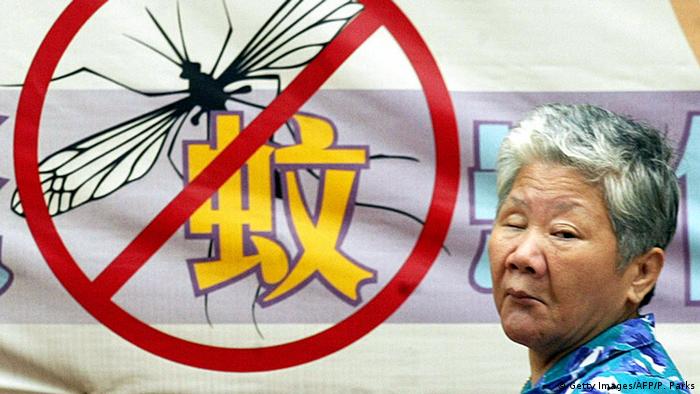
Significant land use changes have been taking place in China, particularly since the economic “Open Door” policy was implemented in 1978. Due to the development of special economic zones following this policy, the last four decades were characterized by rapid and unprecedented urbanization all over China. Meanwhile, since the first dengue outbreak in mainland China after China’s founding in 1949 was reported in 1978, China has been through dengue outbreaks of increasingly larger scales and a widening spatial distribution. Climate change, risk of imported cases, limited surveillance on dengue vectors, and increasing population migration, bring more pressure on the prevention and control of dengue in China. 

There are several pathways by which urbanization increases the risk of dengue. Urbanization could increase the risk of dengue by elevating the human-vector contacting rate, and higher distribution of Aeaegypti was also observed in urban areas. Our review identified that the regional hotspots of dengue epidemics were Guangdong Province and southern Taiwan.

The occurrence and spread of dengue result from a complex interplay of various factors such as meteorological variables, air pollutants, socioeconomic status, and demographic characteristics. Therefore, a holistic assessment based on time series analysis is needed at the regional level to prepare for future changes in climate and land-use on this important disease.

Read the full paper here: Gao P, Pilot E, Rehbock C, Gontariuk M, Doreleijers S, Wang L, Krafft T, Martens P, Liuet Q. (2021) Land use and land cover change and its impacts on dengue dynamics in China: A systematic review. PLoS Neglected Tropical Diseases 15(10).

KNAW commissie Planetary Health

Vereerd lid te zijn van de KNAW commissie Planetary Health die gaat inventariseren welke wetenschappelijke kennis er nodig is op het gebied van planetary health en welke prioriteiten voor kennisontwikkeling er liggen voor Nederland.

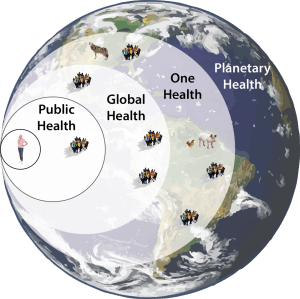
Planetary health is de interdisciplinaire benadering van het verband tussen de gezondheid en welzijn van mens en dier en de ‘gezondheid’ van de aarde. Het gaat daarbij om klimaatverandering en verlies van biodiversiteit maar bijvoorbeeld ook om grootschalige milieuvervuiling, ontbossing, erosie en andere door de mens veroorzaakte veranderingen die gezondheidsrisico’s met zich meebrengen. Die risico’s zijn onder meer infectieziekten, problemen met voedsel- en drinkwatervoorziening, migratie en conflict en mentale gezondheid.

Voor meer informatie zie KNAW website

English

Honored to be a member of the KNAW (The Royal Netherlands Academy of Arts and Sciences) Planetary Health committee, which will inventorize the scientific knowledge needed in the field of planetary health and the priorities for knowledge development for the Netherlands.

Planetary health is the interdisciplinary approach to the link between the health and well-being of human and non-human animals and the ‘health’ of the earth. This concerns climate change and loss of biodiversity, but also, for example, large-scale environmental pollution, deforestation, erosion and other man-made changes that entail health risks. Those risks include infectious diseases, problems with food and drinking water supplies, migration and conflict, and mental health.

For more information see KNAW website

Indigenous Views on Climate Change

Indigenous worldviews can be an alternative approach to thinking about climate change. Since the system of ethics in Western thought is largely anthropocentric and therefore not as useful in addressing complex, natural situations, indigenous ethics could provide a valuable alternative.

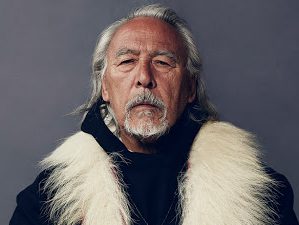
In this movie I talk about this with Angaangaq Angakkorsuaq from Kalaallit Nunaat, Greenland shaman, Chief Phil Lane Jr. of the Ihanktonwan Dakota and Chickasaw Nations, and Adam Kuleit Mwarabu, Parakuiyo Maasai leader.

Angaangaq Angakkorsuaq
Chief Phil Lane Jr.
Adam Kuleit Mwarabu

Report on The Green Deal: What are its Implications for Animals and Nature?

Download the Working paper of the RELAY Workshop on The Green Deal: What are its Implications for Animals and Nature?

In 2019, the European Commission presented a policy document entitled ‘The European Green Deal’. The plan provides the basis for action plans for sustainable development in the policy areas of biodiversity, food systems, agriculture, energy, industry, building and renovating, mobility, eliminating pollution and climate action.

However, ‘animals’, ‘nature’ and ‘sustainability’ are not often mentioned together in this European Green Deal. The reason is likely to be found in the fact that the sustainability debate has been hijacked in recent years by industry and governments. Their view regarding sustainable development significantly has been subordinate to the dogma of economic growth with little regard for animal welfare and concerns for nature.

In the tradition of United Nations reports such as Our Common Future, the European Green Deal puts human wellbeing at its center. The European Commission speaks about protecting Europe’s natural capital and resources. However, we also need to acknowledge the value of nature for its own sake, instead as a mere means for human flourishing. Although we as humans may be privileged in our capacity to respect autonomy and flourishing, the autonomy and flourishing that we must respect is not limited to humans. Moreover, protecting Europe’s nature and its animals for its own sake is perfectly compatible with, and even necessary for human flourishing. Perhaps it is even true that in the long term we will show incapable of protecting nature as a resource for human wellbeing, without at the same time recognizing nature’s intrinsic value. The European Green Deal needs to include a just transition for nature and the animals within as well.

To tackle this issue, in January 2021 a workshop The Green Deal: what are its implications for animals and nature? was organized by an Erasmus+ Jean Monnet project RELAY. The policies behind the European Green Deal in relation to the role of Nature and Animals in our society were central to the discussions, as well as the Green Deal’s shortcomings with regard to the “voiceless” members of the European society and of the regions beyond the EU that might be affected by Green Deal-related policies. By doing so, the central question of the webinar was formulated as follows: “What are the current issues with regard to the ‘true’ sustainability goals the Green Deal should pursue and what actions are required to give animals and nature a more prominent role in the Green Deal debates?”

In the Working paper of the RELAY Workshop on The Green Deal: What are its Implications for Animals and Nature? several key observations, statements and questions concerning the narrative and the discourse are addressed. In part two of this working paper, the workshop presentations and interactive debate have been summarized for further reference.

Webinar: Indigenous and Religious Views on Animals and Nature

Webinar Wednesday April 14 6.30-8.30 pm CET

Our relationship with the natural environment and animals has changed dramatically over time. In this webinar, we will discuss past patterns and future pathways with representatives of various indigenous cultures and religious beliefs. Learning from them about our relationship with animals may be a way we can begin to address the sustainability challenges we see today.

This webinar is free of charge, but you need to register by sending an email before 10th April to marjolijn.staarink@vu.nl. The link for the webinar will then be sent to you in due time.

Program

18.30-19.15 Introduction and movie ‘Animals Are Running Away From Us’ by Pim Martens

19.15-19.30 Ruth Valerio – Canon Theologian Rochester Cathedral

19.30-19.45 Angaangaq Angakkorsuaq – Kalaallit Shaman from Greenland

19.45-20.00 Jayasinhji Jhala  – Hindu Prince

20.00-20.30 Discussion and Q&A