DiCaprio heeft meer bereikt dan klimaatwetenschappers

Symposium over activisme in de wetenschap

Tekst door Maurice Timmerman, gepubliceerd in de Observant

Kun je als wetenschapper tegelijk een activist zijn? Komt je onafhankelijkheid dan niet in het geding? En wat als je met je wetenschappelijke bevindingen andere activisten tegen de haren in strijkt en je inbox volstroomt met haatmails?

Het zijn vragen die afgelopen dinsdag aan bod kwamen tijdens een online UM-symposium, op touw gezet door het Platform voor Onderzoeksethiek en Integriteit en het Platform for Community-Engaged Research. 

Recordings of a livestream discussion about the tension between activism and academic research.

Een van de drie panelleden, onderzoeker Astrid Offermans, vindt dat academici bij hun leest moeten blijven. “We moeten betrouwbare kennis leveren, waarbij we ons onafhankelijk opstellen en open staan voor andere perspectieven. Dat doen activisten niet. Het gevaar is dat activistische wetenschappers aandacht belangrijker vinden dan methodologische zuiverheid, dat ze willen overtuigen in plaats van analyseren, een sexy verhaal voor het voetlicht brengen in plaats van de eerlijke, saaie waarheid.

Jane Goodall

De andere twee panelleden zijn het daar niet mee eens. Pim Martens, hoogleraar duurzame ontwikkeling, noemt zichzelf een ‘scientivist’. “Dat is een publieke intellectueel, denk aan Einstein, die het als een morele verplichting ziet om zich als burger in te zetten voor een betere wereld. Of Jane Goodall die haar leven lang chimpansees bestudeerde en het later opnam voor deze dieren, die benadrukte dat ze net als mensen een emotioneel leven hebben, met waardevolle relaties.”

Wetenschappers twijfelen voortdurend, doet Martens dat ook als activist, vraagt spreekstalmeester Teun Dekker, hoogleraar filosofie aan het University College. 

Zeker, zegt de duurzaamheidsprof. “Ik vraag me weleens af of ik met een mars moet meelopen, of ik blogs over een onderwerp moet publiceren. De grens tussen wetenschap en activisme is soms delicaat.

Farmaceut

Het derde panellid, Maurice Zeegers, hoogleraar epidemiologie, schaart zich achter Martens. “Ik zou haast willen zeggen: alle activisten zouden wetenschappers moeten zijn. Zoeken naar waarheid, zoals Offermans dat benadrukte, gaat goed samen met engagement, maar ook met onderzoek voor het bedrijfsleven. Ik werk op dit moment samen met een advocatenkantoor dat een zaak aanspant tegen een farmaceut.”

Dekker: “Hoe leg je uit dat je wel hun geld accepteert, maar niet per se zegt wat ze willen horen?”

Zeegers: “De bedrijven waar ik voor werk, willen juist die wetenschappelijke conclusie horen, ook als het ze niet uitkomt. Die integriteit is wat wetenschap waardevol maakt.

Gestalkt

Wat als je als ‘scientivist’ te maken krijgt met groepen die je wetenschappelijke conclusies van tafel vegen, vraagt iemand uit de ‘zaal’? “De nachtmerrie van elke wetenschapper”, zegt Dekker , “dat je tienduizend e-mails op je dak krijgt, die niet allemaal even prettig zijn.”

Toch deelt ook Zeegers zijn resultaten op sociale media. “Het is belangrijk om met je poten in de modder te staan, om te begrijpen wat er speelt in de samenleving. En ja, bevindingen die mensen tegen de haren in strijken, moet je ook plaatsen. Als ze maar wetenschappelijk aan de eisen voldoen.”

Martens: “Je hebt niet alles in de hand. Soms verstuur je een tweet, net iets te snel, en dan blijkt dat die een eigen leven gaat leiden. Maar goed, als je werk je passie is, dan wil je dat ook op sociale media delen. Niemand wordt graag gestalkt, maar dat is niet alleen een angst van wetenschappers, maar ook van politici. Het voordeel is dat je als wetenschapper een betrouwbare bijdrage kunt leveren aan discussies.”

Als epidemioloog krijgt Zeegers in deze tijden van corona vaak vragen over vaccinaties. “Je ziet dat de samenleving steeds meer gebruik maakt van wetenschap. En de studies die in de media passeren, kan ik in perspectief plaatsen. Ik vind dat mijn plicht.”

Vele waarheden

Nieuwe vraag uit de zaal, aldus Dekker. “We hebben de mond vol van objectiviteit, waarheid, onafhankelijkheid. Waarom geven we niet gewoon toe dat dit niet bestaat? Is het in stand houden van de pretentie niet gevaarlijker dan toegeven?”

Offermans: “Ik snap wat hier wordt bedoeld, maar ik denk dat de wetenschappelijke zuiverheid en analyse het verschil maken. Zijn er één of vele waarheden, over die vraag kun je lang debatteren, maar zolang je de werkelijkheid academisch benadert is het prima.”

Zeegers: “Objectiviteit bestaat inderdaad niet, iedereen is bevooroordeeld, dat denk ik ook. Maar dat betekent niet dat we niet meer op onze wetenschappelijke methoden kunnen vertrouwen.”

Wereldvrede

Dat wetenschappers ijveren voor een goede zaak vindt Offermans prima, maar liever niet op hetzelfde terrein waarop ze onderzoek doen. “Ik zou dat scheiden.”

Dat lukt niet altijd, zegt Martens. “In een interview word je toch vaak op beide rollen aangesproken. Maar waarom zou je je intellectuele kracht niet gebruiken als activist? Ieder zijn eigen expertise, en als dat gezag oplevert, waarom niet?”

Einstein is daar een goed voorbeeld van, zegt Dekker. “Een groot natuurkundige, maar wat wist hij nou van de wereldvrede, waar hij zich zo voor inzette?”

Martens: “Wat weet Leonardo DiCaprio van klimaatverandering? Maar toen hij daar een paar jaar geleden een speech over gaf, gebeurde er iets. Hij heeft in ieder geval meer bereikt dan ik en mijn collega’s met al onze vakartikelen. Want de klimaatboodschap, die nu gemeengoed is, probeerden wij dertig jaar geleden al aan de man te brengen. Niemand luisterde toen, heel frustrerend.”

Eerlijk

Volgende vraag: hoe belangrijk is objectiviteit en onafhankelijkheid als ondertussen de planeet in brand staat?

“Het illustreert hoe impopulair mijn stellingname is”, zegt Offermans. “Maar er zijn alternatieven. Je kunt je ook opstellen als een eerlijke beurshandelaar, en alle opties en scenario’s laten zien vanuit wetenschappelijk perspectief. Daar hebben beleidsmakers veel baat bij.” 

Maar hoe houd je jezelf op het eerlijke pad, vraagt Dekker.

Martens: “Mijn ervaring is dat zo goed als alle onderzoekers eerlijk zijn.”

Dekker: “Uit een enquête bleek onlangs dat 52 procent van de onderzoekers toegeeft niet altijd volledig integer te zijn. Hoe kan een universiteit eerlijkheid stimuleren?” 

Zeegers: “Dan moet je ook naar de cultuur kijken, en daarbij spelen bijvoorbeeld zaken als werkdruk een rol. Maar buitengewoon belangrijk is dat je als onderzoeker een goede mentor bent en het goede voorbeeld geeft aan je promovendi. Er zijn trouwens ook survey’s waaruit blijkt dat 98 procent van de wetenschappers integer is. Onderzoekers zijn, denk ik, goede mensen.”

Dekker: “Maar wel mensen. Die soms struikelen.”

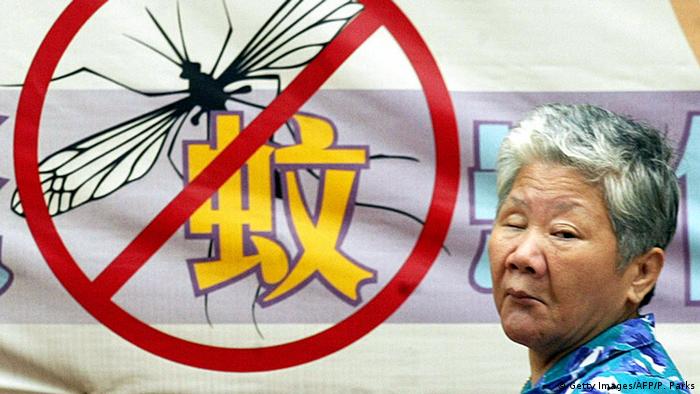
Urbanization and climate change likely to increase dengue risk in China

Significant land use changes have been taking place in China, particularly since the economic “Open Door” policy was implemented in 1978. Due to the development of special economic zones following this policy, the last four decades were characterized by rapid and unprecedented urbanization all over China. Meanwhile, since the first dengue outbreak in mainland China after China’s founding in 1949 was reported in 1978, China has been through dengue outbreaks of increasingly larger scales and a widening spatial distribution. Climate change, risk of imported cases, limited surveillance on dengue vectors, and increasing population migration, bring more pressure on the prevention and control of dengue in China. 

There are several pathways by which urbanization increases the risk of dengue. Urbanization could increase the risk of dengue by elevating the human-vector contacting rate, and higher distribution of Aeaegypti was also observed in urban areas. Our review identified that the regional hotspots of dengue epidemics were Guangdong Province and southern Taiwan.

The occurrence and spread of dengue result from a complex interplay of various factors such as meteorological variables, air pollutants, socioeconomic status, and demographic characteristics. Therefore, a holistic assessment based on time series analysis is needed at the regional level to prepare for future changes in climate and land-use on this important disease.

Read the full paper here: Gao P, Pilot E, Rehbock C, Gontariuk M, Doreleijers S, Wang L, Krafft T, Martens P, Liuet Q. (2021) Land use and land cover change and its impacts on dengue dynamics in China: A systematic review. PLoS Neglected Tropical Diseases 15(10).

The Future of Animal Rights

Over the past decades, many voices have emphasised our interdependence with the other species that inhabit the planet, as well as the need to recognise them as subjects of law. The recognition of animal rights is a historical appeal that has led to the creation of new legal instruments without losing sight of the need to envisage alternative forms of coexistence. This is a radical transformation which, given the acceleration of phenomena such as the loss of biodiversity, cannot be postponed and in which universities, as a space for reflection, research and dissemination, play a key role.

The Ministry of Universities has organised these sessions in collaboration with the Centre de Cultura Contemporània de Barcelona (CCCB) to foster spaces for dialogue on contemporary problematics that form part of the Sustainable Development Goals. In these sessions, bringing together different voices from European universities, we will reflect on animal rights and our care obligations toward the other species with which we coexist. In our session, we will talk about different projects developed in Europe aimed at promoting a new legal and political framework for animal rights.

For (free) registration and live streaming see the CCCB website.

KNAW commissie Planetary Health

Vereerd lid te zijn van de KNAW commissie Planetary Health die gaat inventariseren welke wetenschappelijke kennis er nodig is op het gebied van planetary health en welke prioriteiten voor kennisontwikkeling er liggen voor Nederland.

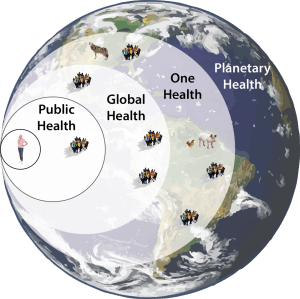
Planetary health is de interdisciplinaire benadering van het verband tussen de gezondheid en welzijn van mens en dier en de ‘gezondheid’ van de aarde. Het gaat daarbij om klimaatverandering en verlies van biodiversiteit maar bijvoorbeeld ook om grootschalige milieuvervuiling, ontbossing, erosie en andere door de mens veroorzaakte veranderingen die gezondheidsrisico’s met zich meebrengen. Die risico’s zijn onder meer infectieziekten, problemen met voedsel- en drinkwatervoorziening, migratie en conflict en mentale gezondheid.

Voor meer informatie zie KNAW website

English

Honored to be a member of the KNAW (The Royal Netherlands Academy of Arts and Sciences) Planetary Health committee, which will inventorize the scientific knowledge needed in the field of planetary health and the priorities for knowledge development for the Netherlands.

Planetary health is the interdisciplinary approach to the link between the health and well-being of human and non-human animals and the ‘health’ of the earth. This concerns climate change and loss of biodiversity, but also, for example, large-scale environmental pollution, deforestation, erosion and other man-made changes that entail health risks. Those risks include infectious diseases, problems with food and drinking water supplies, migration and conflict, and mental health.

For more information see KNAW website

Do religious beliefs influence concerns for animal welfare?

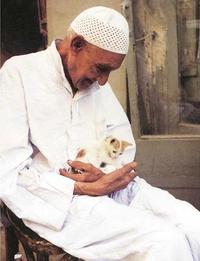
Animals—specifically, beliefs and attitudes towards them—have a central role within the field of human-animal relationships, animal welfare, ecological belief and sustainability. However, there are limited studies on the relationship between religious belief and public attitudes toward animals, and the role religion plays regarding attitudes towards animals is as yet still unclear.

This study explores the relationship between individuals’ acceptability for harming animals as one representation of ecological concern (measured using Animal Issue Scale (AIS)) and their religious belief (measured using Religious Orientation Scale (ROS)) and ethical ideology (measured using Ethical Position Questionnaire (EPQ)). The study surveyed 929 Muslim teachers and school staff in East Java, Indonesia.

The present study highlights the significant relationship between religious orientation and relativism to AIS. Regarding relativism, the results imply that individuals who believe in a universal governing moral principle are more likely to have a higher awareness of animal protection, and, therefore, a lower acceptability toward harming animals. For religious orientation, results imply that individuals who have deep personal religious belief and commitment to their religion would likely have a low acceptability for harming animals. However, when people have extra ulterior motives of for pursuing social gain, status, affiliation, or membership with their religious activities participation, it would be more likely that they have a higher acceptability for harming animals. Thus, the present study not only supports previous findings, but also contributes to addressing religious orientation as a significant variable closely related to attitudes towards animals.

In addition, the present study extends the potential for animal protection awareness to reach broader platforms, for example, in the case where religious values and institutions could serve as motivational platforms. Finally, as this is the first paper to investigate how both religious orientation and ethical ideology relates to animal protection, other research focusing on specific animals such as companion animals, carnivores, or animals important to maintaining ecosystem health for environmental sustainability, may be introduced as focal points in religious studies and related platforms.

Read the full paper here: Pasaribu, D., Martens, P. & Takwin, B. (2021). Do religious beliefs influence concerns for animal welfare? The role of religious orientation and ethical ideologies in attitudes toward animal protection amongst Muslim teachers and school staff in East Java, Indonesia. PLoS ONE, 16(7).

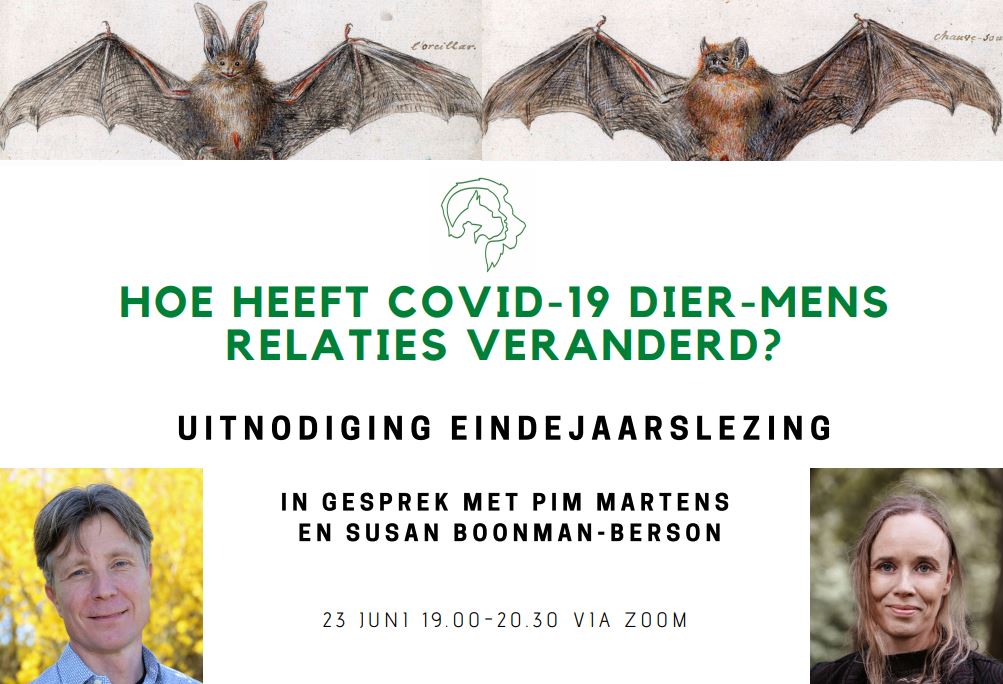
Hoe heeft COVID-19 dier-mens relaties veranderd?

Het Centrum voor DierMens Studies nodigt je graag uit voor de eindejaarslezing op 23 juni: ‘Hoe heeft COVID-19 dier-mens relaties veranderd?’

Via Zoom bespreken we samen met Pim Martens en Susan Boonman-Berson hoe de coronapandemie mens-dierrelaties zichtbaar maakt, verrijkt, en onder druk zet. 

Niet-menselijke dieren zijn onmisbaar geweest tijdens de pandemie: van de zoönotische oorsprong tot het massaal adopteren van puppies en van dieren die plots de stad in trokken tot recordaantallen deelnemers in de Nationale Vogeltelling. Dieren als gezondheidsrisico, als gezelschap, als gast, als eten; de pandemie dwong ons om te reflecteren op hoe wij ons verhouden tot niet-mensen.

Maar hoe duurzaam is deze reflectie en in hoeverre zullen onze relaties met andere dieren hierdoor veranderen op de lange termijn?

Beide sprekers zullen tijdens de lezing hun inzichten delen op de invloed die corona heeft op mens-dierrelaties waarna er tijd is voor vragen en discussie. 

Wanneer?

Woensdag 23 juni van 19:00-20.30

Hoe?

Meld je via dit formulier aan en je ontvangt de Zoomlink vanzelf in je mailbox.

Wie?

  • Pim Martens is hoogleraar ‘Sustainable Development’ aan de Universiteit Maastricht en is Senior Fellow in het programma ‘Ethics of the Anthropocene’ op de Vrije Universiteit Amsterdam. Buiten zijn academische werk om is hij oprichter van de ‘think and do tank’ AnimalWise waarmee hij wetenschap combineert met activisme om tot een dierzamere samenleving te komen.
  • Susan Boonman-Berson is oprichter van het platform Bear at Work wat staat voor een samenleving waarin mens en wild dier duurzaam en als bondgenoot met elkaar samenleven. Ze is gespecialiseerd in mens-dier conflicten en schreef het boek ‘Living with Wild Animals’  aan de hand van haar promotieonderzoek.

Wij kijken er naar uit om jou woensdag te mogen ontvangen!

Conflicts between wolves and humans are unnecessary

Conflicts with wolves arise because wolves kill farm animals, especially sheep, or approach humans. It is expected that young wolves learn from their parent pack (PP) what their prey is and if it is safe to be near humans. To confirm this, we researched whether the behavior of young migrating wolves (loners), after they leave the pack, resembles PP behavior. Fourteen loners entering the Netherlands between 2015 and 2019 could be identified and genetically linked to their PPs. Loner and PP behavior was similar in 10 out of 14 cases. Like their PPs, some young wolves killed sheep and were near humans, others killed sheep and did not approach humans, while two loners were unproblematic, they did not kill sheep nor were they in proximity to humans. Thus, the PP behavior did predict loner’s behavior and conflicts may be similar between young wolves and their PPs. However, conflicts need not arise. To achieve that, new prevention methods are proposed to teach wolves in the PP not to approach sheep and humans. As a result, new generations may not be problematic when leaving the PP.

Read the full paper here: Van Liere, D.; Siard, N.; Martens, P.; Jordan, D. Conflicts with Wolves Can Originate from Their Parent Packs. Animals 2021, 11, 1801.

What do Chinese think about offshore oil and gas drilling?

Offshore oil and gas drilling provides societies with billions of dollars in profit, employs millions of people, and offers substantial tax income for governments. However, the sector simultaneously poses substantial risks of polluting the marine environment and threatening marine biodiversity. Given the competing interests in offshore drilling, knowledge of citizens’ attitudes is of vital importance .

In our research we found that Chinese coastal residents have low levels of support, high risk-perception, and moderate trust in offshore oil and gas drilling. They are concerned about the frequency of large-scale oil spills, threats to human life (including the risks of getting cancer) and threats to marine life. NIMBY mentality is apparent in coastal residents’ support toward offshore drilling and they tend to trust scientific statements from environmental groups more than from the oil industry.

It is not difficult to comprehend why coastal residents are reluctant to support offshore oil and gas drilling in China. On one hand, traditional Chinese culture favors the harmonious coexistence of human beings and the environment. Confucianism promotes the concept of “tianren heyi,” which refers to harmony between human society and nature. Taoism promotes a “wuwei” philosophy, which has no tolerance for human action that is against the laws of nature. As two cornerstones of traditional Chinese culture, Confucianism and Taoism deeply ingrain an environmental-friendly belief in the Chinese mindset. Offshore drilling will alter the appearance of nature and jeopardize the balance of the marine ecosystem, therefore contradicting the Chinese ideal of harmonious coexistence.

Read the full paper here: Mo Chen & Pim Martens, (2021). Coastal residents’ attitudes toward offshore oil and gas drilling in China. The Extractive Industries and Society.

Indigenous Views on Climate Change

Indigenous worldviews can be an alternative approach to thinking about climate change. Since the system of ethics in Western thought is largely anthropocentric and therefore not as useful in addressing complex, natural situations, indigenous ethics could provide a valuable alternative.

In this movie I talk about this with Angaangaq Angakkorsuaq from Kalaallit Nunaat, Greenland shaman, Chief Phil Lane Jr. of the Ihanktonwan Dakota and Chickasaw Nations, and Adam Kuleit Mwarabu, Parakuiyo Maasai leader.

Angaangaq Angakkorsuaq
Chief Phil Lane Jr.
Adam Kuleit Mwarabu

Report on The Green Deal: What are its Implications for Animals and Nature?

Download the Working paper of the RELAY Workshop on The Green Deal: What are its Implications for Animals and Nature?

In 2019, the European Commission presented a policy document entitled ‘The European Green Deal’. The plan provides the basis for action plans for sustainable development in the policy areas of biodiversity, food systems, agriculture, energy, industry, building and renovating, mobility, eliminating pollution and climate action.

However, ‘animals’, ‘nature’ and ‘sustainability’ are not often mentioned together in this European Green Deal. The reason is likely to be found in the fact that the sustainability debate has been hijacked in recent years by industry and governments. Their view regarding sustainable development significantly has been subordinate to the dogma of economic growth with little regard for animal welfare and concerns for nature.

In the tradition of United Nations reports such as Our Common Future, the European Green Deal puts human wellbeing at its center. The European Commission speaks about protecting Europe’s natural capital and resources. However, we also need to acknowledge the value of nature for its own sake, instead as a mere means for human flourishing. Although we as humans may be privileged in our capacity to respect autonomy and flourishing, the autonomy and flourishing that we must respect is not limited to humans. Moreover, protecting Europe’s nature and its animals for its own sake is perfectly compatible with, and even necessary for human flourishing. Perhaps it is even true that in the long term we will show incapable of protecting nature as a resource for human wellbeing, without at the same time recognizing nature’s intrinsic value. The European Green Deal needs to include a just transition for nature and the animals within as well.

To tackle this issue, in January 2021 a workshop The Green Deal: what are its implications for animals and nature? was organized by an Erasmus+ Jean Monnet project RELAY. The policies behind the European Green Deal in relation to the role of Nature and Animals in our society were central to the discussions, as well as the Green Deal’s shortcomings with regard to the “voiceless” members of the European society and of the regions beyond the EU that might be affected by Green Deal-related policies. By doing so, the central question of the webinar was formulated as follows: “What are the current issues with regard to the ‘true’ sustainability goals the Green Deal should pursue and what actions are required to give animals and nature a more prominent role in the Green Deal debates?”

In the Working paper of the RELAY Workshop on The Green Deal: What are its Implications for Animals and Nature? several key observations, statements and questions concerning the narrative and the discourse are addressed. In part two of this working paper, the workshop presentations and interactive debate have been summarized for further reference.