Category Archives: interdisciplinary

DiCaprio heeft meer bereikt dan klimaatwetenschappers

Symposium over activisme in de wetenschap

Tekst door Maurice Timmerman, gepubliceerd in de Observant

Kun je als wetenschapper tegelijk een activist zijn? Komt je onafhankelijkheid dan niet in het geding? En wat als je met je wetenschappelijke bevindingen andere activisten tegen de haren in strijkt en je inbox volstroomt met haatmails?

Het zijn vragen die afgelopen dinsdag aan bod kwamen tijdens een online UM-symposium, op touw gezet door het Platform voor Onderzoeksethiek en Integriteit en het Platform for Community-Engaged Research. 

Recordings of a livestream discussion about the tension between activism and academic research.

Een van de drie panelleden, onderzoeker Astrid Offermans, vindt dat academici bij hun leest moeten blijven. “We moeten betrouwbare kennis leveren, waarbij we ons onafhankelijk opstellen en open staan voor andere perspectieven. Dat doen activisten niet. Het gevaar is dat activistische wetenschappers aandacht belangrijker vinden dan methodologische zuiverheid, dat ze willen overtuigen in plaats van analyseren, een sexy verhaal voor het voetlicht brengen in plaats van de eerlijke, saaie waarheid.

Jane Goodall

De andere twee panelleden zijn het daar niet mee eens. Pim Martens, hoogleraar duurzame ontwikkeling, noemt zichzelf een ‘scientivist’. “Dat is een publieke intellectueel, denk aan Einstein, die het als een morele verplichting ziet om zich als burger in te zetten voor een betere wereld. Of Jane Goodall die haar leven lang chimpansees bestudeerde en het later opnam voor deze dieren, die benadrukte dat ze net als mensen een emotioneel leven hebben, met waardevolle relaties.”

Wetenschappers twijfelen voortdurend, doet Martens dat ook als activist, vraagt spreekstalmeester Teun Dekker, hoogleraar filosofie aan het University College. 

Zeker, zegt de duurzaamheidsprof. “Ik vraag me weleens af of ik met een mars moet meelopen, of ik blogs over een onderwerp moet publiceren. De grens tussen wetenschap en activisme is soms delicaat.

Farmaceut

Het derde panellid, Maurice Zeegers, hoogleraar epidemiologie, schaart zich achter Martens. “Ik zou haast willen zeggen: alle activisten zouden wetenschappers moeten zijn. Zoeken naar waarheid, zoals Offermans dat benadrukte, gaat goed samen met engagement, maar ook met onderzoek voor het bedrijfsleven. Ik werk op dit moment samen met een advocatenkantoor dat een zaak aanspant tegen een farmaceut.”

Dekker: “Hoe leg je uit dat je wel hun geld accepteert, maar niet per se zegt wat ze willen horen?”

Zeegers: “De bedrijven waar ik voor werk, willen juist die wetenschappelijke conclusie horen, ook als het ze niet uitkomt. Die integriteit is wat wetenschap waardevol maakt.

Gestalkt

Wat als je als ‘scientivist’ te maken krijgt met groepen die je wetenschappelijke conclusies van tafel vegen, vraagt iemand uit de ‘zaal’? “De nachtmerrie van elke wetenschapper”, zegt Dekker , “dat je tienduizend e-mails op je dak krijgt, die niet allemaal even prettig zijn.”

Toch deelt ook Zeegers zijn resultaten op sociale media. “Het is belangrijk om met je poten in de modder te staan, om te begrijpen wat er speelt in de samenleving. En ja, bevindingen die mensen tegen de haren in strijken, moet je ook plaatsen. Als ze maar wetenschappelijk aan de eisen voldoen.”

Martens: “Je hebt niet alles in de hand. Soms verstuur je een tweet, net iets te snel, en dan blijkt dat die een eigen leven gaat leiden. Maar goed, als je werk je passie is, dan wil je dat ook op sociale media delen. Niemand wordt graag gestalkt, maar dat is niet alleen een angst van wetenschappers, maar ook van politici. Het voordeel is dat je als wetenschapper een betrouwbare bijdrage kunt leveren aan discussies.”

Als epidemioloog krijgt Zeegers in deze tijden van corona vaak vragen over vaccinaties. “Je ziet dat de samenleving steeds meer gebruik maakt van wetenschap. En de studies die in de media passeren, kan ik in perspectief plaatsen. Ik vind dat mijn plicht.”

Vele waarheden

Nieuwe vraag uit de zaal, aldus Dekker. “We hebben de mond vol van objectiviteit, waarheid, onafhankelijkheid. Waarom geven we niet gewoon toe dat dit niet bestaat? Is het in stand houden van de pretentie niet gevaarlijker dan toegeven?”

Offermans: “Ik snap wat hier wordt bedoeld, maar ik denk dat de wetenschappelijke zuiverheid en analyse het verschil maken. Zijn er één of vele waarheden, over die vraag kun je lang debatteren, maar zolang je de werkelijkheid academisch benadert is het prima.”

Zeegers: “Objectiviteit bestaat inderdaad niet, iedereen is bevooroordeeld, dat denk ik ook. Maar dat betekent niet dat we niet meer op onze wetenschappelijke methoden kunnen vertrouwen.”

Wereldvrede

Dat wetenschappers ijveren voor een goede zaak vindt Offermans prima, maar liever niet op hetzelfde terrein waarop ze onderzoek doen. “Ik zou dat scheiden.”

Dat lukt niet altijd, zegt Martens. “In een interview word je toch vaak op beide rollen aangesproken. Maar waarom zou je je intellectuele kracht niet gebruiken als activist? Ieder zijn eigen expertise, en als dat gezag oplevert, waarom niet?”

Einstein is daar een goed voorbeeld van, zegt Dekker. “Een groot natuurkundige, maar wat wist hij nou van de wereldvrede, waar hij zich zo voor inzette?”

Martens: “Wat weet Leonardo DiCaprio van klimaatverandering? Maar toen hij daar een paar jaar geleden een speech over gaf, gebeurde er iets. Hij heeft in ieder geval meer bereikt dan ik en mijn collega’s met al onze vakartikelen. Want de klimaatboodschap, die nu gemeengoed is, probeerden wij dertig jaar geleden al aan de man te brengen. Niemand luisterde toen, heel frustrerend.”

Eerlijk

Volgende vraag: hoe belangrijk is objectiviteit en onafhankelijkheid als ondertussen de planeet in brand staat?

“Het illustreert hoe impopulair mijn stellingname is”, zegt Offermans. “Maar er zijn alternatieven. Je kunt je ook opstellen als een eerlijke beurshandelaar, en alle opties en scenario’s laten zien vanuit wetenschappelijk perspectief. Daar hebben beleidsmakers veel baat bij.” 

Maar hoe houd je jezelf op het eerlijke pad, vraagt Dekker.

Martens: “Mijn ervaring is dat zo goed als alle onderzoekers eerlijk zijn.”

Dekker: “Uit een enquête bleek onlangs dat 52 procent van de onderzoekers toegeeft niet altijd volledig integer te zijn. Hoe kan een universiteit eerlijkheid stimuleren?” 

Zeegers: “Dan moet je ook naar de cultuur kijken, en daarbij spelen bijvoorbeeld zaken als werkdruk een rol. Maar buitengewoon belangrijk is dat je als onderzoeker een goede mentor bent en het goede voorbeeld geeft aan je promovendi. Er zijn trouwens ook survey’s waaruit blijkt dat 98 procent van de wetenschappers integer is. Onderzoekers zijn, denk ik, goede mensen.”

Dekker: “Maar wel mensen. Die soms struikelen.”
Urbanization and climate change likely to increase dengue risk in China

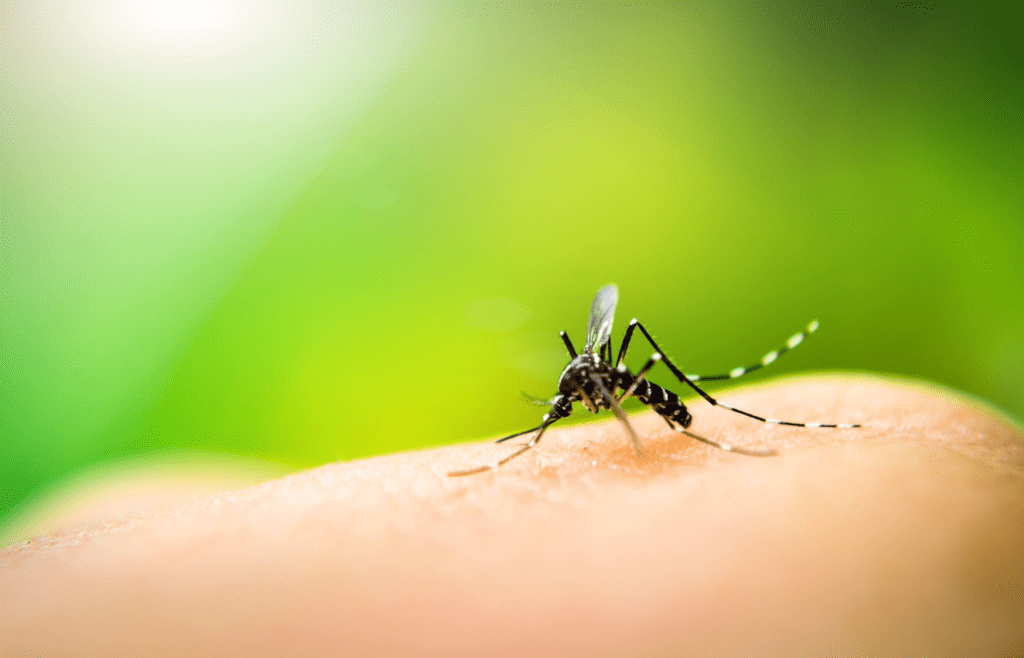
Significant land use changes have been taking place in China, particularly since the economic “Open Door” policy was implemented in 1978. Due to the development of special economic zones following this policy, the last four decades were characterized by rapid and unprecedented urbanization all over China. Meanwhile, since the first dengue outbreak in mainland China after China’s founding in 1949 was reported in 1978, China has been through dengue outbreaks of increasingly larger scales and a widening spatial distribution. Climate change, risk of imported cases, limited surveillance on dengue vectors, and increasing population migration, bring more pressure on the prevention and control of dengue in China. 

There are several pathways by which urbanization increases the risk of dengue. Urbanization could increase the risk of dengue by elevating the human-vector contacting rate, and higher distribution of Aeaegypti was also observed in urban areas. Our review identified that the regional hotspots of dengue epidemics were Guangdong Province and southern Taiwan.

The occurrence and spread of dengue result from a complex interplay of various factors such as meteorological variables, air pollutants, socioeconomic status, and demographic characteristics. Therefore, a holistic assessment based on time series analysis is needed at the regional level to prepare for future changes in climate and land-use on this important disease.

Read the full paper here: Gao P, Pilot E, Rehbock C, Gontariuk M, Doreleijers S, Wang L, Krafft T, Martens P, Liuet Q. (2021) Land use and land cover change and its impacts on dengue dynamics in China: A systematic review. PLoS Neglected Tropical Diseases 15(10).

KNAW commissie Planetary Health

Vereerd lid te zijn van de KNAW commissie Planetary Health die gaat inventariseren welke wetenschappelijke kennis er nodig is op het gebied van planetary health en welke prioriteiten voor kennisontwikkeling er liggen voor Nederland.

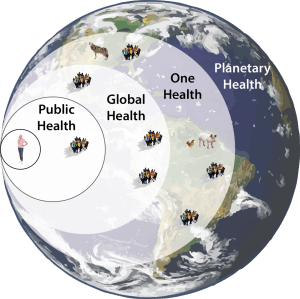
Planetary health is de interdisciplinaire benadering van het verband tussen de gezondheid en welzijn van mens en dier en de ‘gezondheid’ van de aarde. Het gaat daarbij om klimaatverandering en verlies van biodiversiteit maar bijvoorbeeld ook om grootschalige milieuvervuiling, ontbossing, erosie en andere door de mens veroorzaakte veranderingen die gezondheidsrisico’s met zich meebrengen. Die risico’s zijn onder meer infectieziekten, problemen met voedsel- en drinkwatervoorziening, migratie en conflict en mentale gezondheid.

Voor meer informatie zie KNAW website

English

Honored to be a member of the KNAW (The Royal Netherlands Academy of Arts and Sciences) Planetary Health committee, which will inventorize the scientific knowledge needed in the field of planetary health and the priorities for knowledge development for the Netherlands.

Planetary health is the interdisciplinary approach to the link between the health and well-being of human and non-human animals and the ‘health’ of the earth. This concerns climate change and loss of biodiversity, but also, for example, large-scale environmental pollution, deforestation, erosion and other man-made changes that entail health risks. Those risks include infectious diseases, problems with food and drinking water supplies, migration and conflict, and mental health.

For more information see KNAW website

In Memoriam: Nobel Prize winner Paul Crutzen

Me awarding Paul Crutzen his honorary doctorate.
Meteorologist and Nobel Prize winner Paul Crutzen died in his hometown Mainz on Thursday 28 January 2021

Paul Crutzen was awarded an honorary doctorate on Monday 14 January 2013 during the 37th anniversary (Dies Natalis) of Maastricht University. I had the honor to act as honorary promoter. I met Paul Crutzen during lectures we both gave to PhD students at the Polytech Grenoble. I got to know Paul Crutzen as a very nice, calm and modest man. Certainly not someone who shouts his Nobel Prize status from the rooftops. As scientific friends we kept in touch over the years.

Paul Crutzen has been a source of inspiration for me. Not only as a person – in an academic world where a lot of attention is paid to the ones with the biggest mouth, he was a relief – but also in terms of his scientific endeavors. Paul is someone who transcends boundaries, who is not only concerned with chemistry, but is also concerned with social issues, such as human rights. He told me, while we had lunch together during the break of our lectures, that when doing interdisciplinary research you need to be thick-skinned. However, if you persevere, the intellectual reward and social relevance is worth it.

The death of Paul Cutzen received extensive attention in the various media. To my knowledge, this was hardly the case in the Limburg media. While the laureate, in addition to Peter Debije, is the second Nobel Prize winner with South Limburg roots (from his grandfather’s side). A brief statement appeared in De Limburger newspaper the day after his death. That was all.

Until now, Maastricht University and its magazine Observant paid no attention at all to the death of Paul Crutzen. An In Memoriam in the Observant of the honorary doctor of Maastricht University would have been appropriate. In fact – I would argue for the establishment of a Paul Crutzen Institute – which focuses on interdisciplinary research into the Anthropocene (also a concept launched by Paul), global environmental problems such as climate change and biodiversity loss. Not only urgently needed at Maastricht University, but also a fitting tribute for this endearing, great thinker.

(With thanks to the genealogist Funs Patelski, editor of the Limburgs Tijdschrift voor Genealogy, who researched the Limburg ancestors of Paul Crutzen; Dutch version in Observant)

Animals Are Running Away From Us – Indigenous & Religious Views on Animals

New Documentary!

Our relationship with the natural environment and animals has changed dramatically over time. In this documentary, I discuss past patterns and future pathways with representatives of various indigenous cultures and religious beliefs. Learning from them about our relationship with animals may be a way we can begin to address the sustainability challenges we see today.

Nieuw centrum wil dieren serieus nemen

In de natuurwetenschappen worden dieren als objecten bestudeerd, en in de sociale- en de geesteswetenschappen staat de mens centraal. Het nieuwe Centrum voor DierMens Studies wil in de wetenschap meer aandacht voor de relatie tussen beide, waarbij ook dieren als actieve, sociale en intelligente individuen worden beschouwd.

Mede-oprichter en voorzitter Maarten Reesink (wetenschapper DierMens Studies):

“In de wetenschap worden dieren bijna alleen gezien al interessant onderwerp voor de biologie, en verder meestal als objecten gezien of gebruikt. Terwijl in onze mensenmaatschappij dieren juist overal aanwezig zijn: als huisgenoten, werkdieren en als voedsel, in films, op tv en in onze populaire cultuur, in dierentuinen en in het wild. In DierMens Studies staan al die vormen van contact tussen mens en dier centraal. Waarbij dieren niet worden gezien als gebruiksvoorwerpen of decorstukken in onze mensenmaatschappij, maar als gelijkwaardige medebewoners van deze wereld.”

In januari 2021 is het Centrum voor DierMens Studies opgericht door onderzoekers en studenten van de Universiteit van Amsterdam. Door het interdisciplinaire vakgebied DierMens Studies te promoten wil het Centrum een brug slaan tussen natuurwetenschappen en sociale- en geesteswetenschappen. Het Centrum is een platform voor wetenschappers en studenten aan alle Nederlandse universiteiten die zich bezighouden met de vele relaties tussen mens en dier. Iedereen die is geïnteresseerd in onze band met (andere) dieren kan er terecht voor informatie, wetenschappelijke publicaties en onderwijsaanbod.

Op deze manier vraagt het Centrum academische aandacht voor de plaats van dieren in de maatschappij, en biedt het een netwerk voor de groei van het internationale vakgebied (Human) Animal Studies in Nederland. Het centrum wil de groei van dit vakgebied in Nederland verder stimuleren en een brug slaan tussen universiteiten, onderzoekers, studenten en een breed publiek met een interesse in de relaties tussen mens en dier.

Naast het delen van kennis en het bieden van een platform en een netwerk, gaat het Centrum evenementen en netwerkbijeenkomsten organiseren.

Het Centrum voor DierMens Studies is opgericht door (oud-) UvA-studenten Caatje Kluskens en Fien Lindelauff in samenwerking met UvA-docent Human-Animal Studies Maarten Reesink en professors Leonie Cornips en Pim Martens van de Universiteit van Maastricht.

Meer informatie: https://www.diermensstudies.nl/

Diversity in Depth: Equity Between Humans and Non-humans in Nature-Culture

Date: Tuesday 24 November – time: 19.00-21.00

With planet earth at risk, why do you fuzz over gender and diversity issues rather than prioritizing current ecological challenges? Is societal discrimination the most pressing problem when humankind’s survival is at stake?” Questions such as these are not uncommon. However, they suggest a false opposition. Environmental problems and concerns with social equity do not compete with each over pride of place on academic and political agenda’s. On the contrary, they are directly related in that they both feed off a common ground. In this webinar, Pim Martens  and Lies Wesseling will expose this common ground, by revealing how the exploitation of humans and non-humans are both rooted in an instrumentalist conception of nature. They will also sketch the contours of alternative conceptions of the more-than-human world.

All members of the UM community are warmly invited to participate. This webinar is also part of the Maastricht Summerschool on Human and Animal Relations and Interactions taking place on November 21 and 22, 2020. Participation is free but you need to enroll before November 20, 2020, by send an email to: Lies.Wesseling@Maastrichtuniversity.nl.

Speakers:

Pim Martens, Professor of Sustainable Development, Chair Platform Human and non-human Animal Relations, and  Interations (HARI, FASoS), and Senior Fellow in the Ethics of the Anthropocene Program at the Vrije Universiteit Amsterdam.  

 Lies Wesseling, director Centre for Gender and Diversity and Professor of Cultural Memory, Gender and Diversity at the Faculty of Arts and Social Sciences.

Maastricht University Weekend Course Human and Animal Relationships and Interactions (HARI)

6-7 March 2021 (Weekend Course) (1 ECTS)

Register here.

Though we live with them, eat them, love them, and wear them, we give very little academic attention to the roles of animals in society. The underlying theme of the course will be re-evaluating our understandings of animals and gauging the individual and collective responsibilities that we, as humans, must negotiate with non-human animals.

This course will also explore and consider the different types of relationships between animals and humans in contemporary society from e.g. a historical, social and linguistic perspectives. Topics include companion animals, animal communication and emotions, animal-assisted therapy.

At the end of this course, students should able to:
• exhibit strong critical thinking skills in their study of the interactions between humans and nonhuman animals and of the roles of nonhuman animals in human society.
• synthesize interdisciplinary information as it relates to anthrozoology.
• identify strengths and weaknesses in arguments regarding human and nonhuman animals.
• construct a written, evidence-based argument on a HARI topic.

Furthermore, the students will:
• Understand different perspectives regarding animals
• Understand the state-of the–art of animal emotions and animal communication

This is an interdisciplinary course, so open for all students with a genuine interest in critical animal studies and how we, as humans, interact with them.

Maastricht University evening course health and climate change

02 November – 13 November (Daily evening class CET) (2 ECTS)

Register here.

Climate change poses serious challenges for humans around the world. Global warming is perceived as one of the biggest global health risks of the twentieth century which could have a range of effects on human health. Global warming is thought to have an impact on vector-borne disease, water-related disease, heat- and cold- related deaths, allergies, air pollution and malnutrition. The projected increases in extreme climate events such as floods, droughts, and possible intense tropical cyclones could also have wide ranging direct and indirect effects on health. Although the effect of climate change will be experienced worldwide, its impact will not be evenly distributed among people. In low income countries, climate change is believed to further exacerbate existing vulnerability to disease and food security risks, as their populations are, for instance, more reliant on agriculture, more vulnerable to droughts and have a lower adaptive capacity. As climate change can be seen as an amplifier of existing and emerging health risk, it might increase health inequalities and is likely to widen the health gap between rich and poor.

If you’d like to know more about the causes and implications of climate change, then register here for the fall evening edition for this course at Maastricht University before October 15.

Scientivists urgently needed!

Almost every scientist recognises this picture. Having devoted much of their lives to perform research on a specific issue, but not being able to get the message outside the academic walls (and it’s not only the government that’s ‘out there’). This holds for the more fundamental sciences, but even more so for research on more complex issues, like climate change, poverty, biodiversity loss, financial-economic crisis, and the current corona pandemic.

Of course, many scientists are to be blamed as well. Being so caught up in their own scientific square centimetre, they are unable to communicate the main message of their research to others. Stimulated by the perverse publication system that only accounts for peer-reviewed publications (and not so much for more understandable messages), leaves people outside academia with only scientific papers. Not very useful in the public arena.

But still. Isn’t it funny, that a society that pays lots of money to universities and research centres, that does value teaching and research done at these places highly, then dismisses results of these institutes if it is not ‘handy’, and perhaps a little too vague?

Academia has responded through the initiation of new fields of research, such as sustainability science, focusing on research collaborations among scientists from different disciplines and non-academic stakeholders from business, government, and the civil society. Not so much for the fundamental sciences, but for the earlier mentioned ‘complex societal issues’ humanity faces today. The idea behind this is that we all need to work together in order to address sustainability challenges and develop real solution patterns.

Well, that’s a step in the right direction. However, being good scientists, this idea of ‘sustainability science’ is becoming formalised rapidly. And  – although classified by concepts such as post-normal, mode-2, triple helix, and other science paradigms – it still are ‘scientific’ classifications. With other words, it is being ‘bounded’ by similar rules that apply to other sciences as well.

From a scientific point of view, this is fine. But what about the point of view of moving forward to a more sustainable world? Does this not oblige scientists to take more responsibility, especially at times when many signals in nature and society are red? Or do we (scientists) continue to discuss the rules under which ‘sustainability science’ needs to be operated? Rules that probably will be ‘dismissed’ by the other stakeholders if it suits their purpose?

It is about time for many (more) scientists to become scientivists. Scientivists are people that are engaged in a systematic activity to acquire knowledge (the ‘science part’), to promote, impede, or direct societal change (the ‘activist part’). Scientivism can take a wide range of forms from writing letters to newspapers or politicians, to economic activism, such as boycotts, sit-ins etc. Scientivists are not afraid of interfering with legitimized procedures and official politics when science shows this would be needed.

On the other hand, scientivists must be aware that their actions may increase the risk of scientific results inappropriately being used into social discourses and in the media. This might lead to situations where, for instance, researchers find themselves unwittingly “supporting” an application of the generated knowledge they might strongly disagree with.

It is, therefore, not a ‘job’ (as for most of us ‘being a scientist’ is), but rather an ‘attitude’. An attitude that may be urgently to move forward to a more sustainable society. As in this era of social media, opportunities for scientivists will increase as we speak, there are no reasons not to join…unless you do not have that attitude…

(Published earlier (in 2012) by Pim Martens and Jan Rotmans)

See also (in Dutch): Een taxonomie van de wetenschapsactivist and The meaning of academia in times of environmental crisis.